Inspirational visionaries of the movement
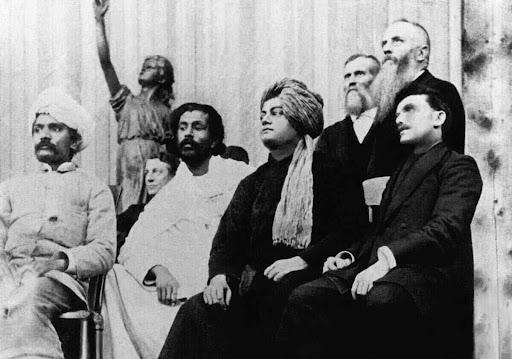
“Arise, awake, stop not till the goal is reached.” Swami Vivekananda
As per the British secret reports, authorities deemed Vivekananda more dangerous after his death than during his life. His ideals of “man-making” and “character-building” were seen as fuelling the revolutionary movement for India’s independence.
Stand firm and strong in the era of darkness
In the name of good governance the British colonial rulers organised systematic loot of Indian subcontinent and its people. This was accompanied by racial discrimination and fake supremacy attitudes on the part of the colonial masters. For the Indians, it was needed to stand firm and strong, in that era of darkness, the disciple of spiritual guru Sri Ramakrishna Paramhamsa, Narendra Nath Dutta known as Swami Vikekananda placed India and its civilizational values in an emphatic way at the world stage through his historic speech at the ‘World’s Parliament of Religions’ in Chicago on September 11, 1893. The Americans heard him with great surprise, that how a monk from a poor, subjugated country like India was able to teach something which they had never heard before. How Swamiji’s lectures moved the American people could be assessed by the remarks by ‘The New York Herald’ at that time, ‘Vivekananda is undoubtedly the greatest figure in the Parliament of Religions: after hearing him we felt how foolish it is to send missionaries to this learned nation.”
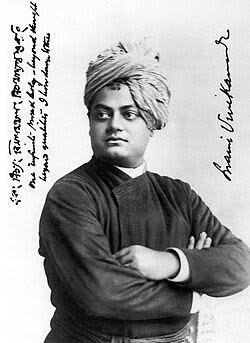
(this image is in public domain, collected from Wikipedia)
The great philosopher, reformer, teacher, guru Swami Vivekananda left the world at an early age of 39 years only in 1902, but it was a life of service to his motherland, to the poor, inspired the youth of India, taught the world about the teachings of Indian philosophy, Vedanta and became the spiritual guru of the world in general. His teachings immensely inspired the freedom fighters of India and his influence among the revolutionaries was monumental.
Netaji Subhas Chandra Bose, himself had wrote that “how shall I express in language my ineptness to Sri Ramakrisha and Swami Vivekananda? It is under the sacred influence my life was first awakened. Like ‘Nivedina’ I also regarded Ramakrishna and Vivekananda as two aspects of one indivisible personality. If Swamiji had been alive today, he would have been my guru (Master) or I would have accepted him as my guru.” Revolutionary leader and founder of revolutionary group of Dhaka Mukti Sangha, Hem Chandra Ghose, wrote about his meeting with the great guru. Ghose wrote, ‘the patriot-saint (Vivekananda) blessed me with a gentle look and said, “Man-making is my mission of life. Henchandra: you try with your comrades to translate this mission of mine into action and reality. Read Bankimchandra and Bankimchandra, and emulate his desha-bhakti and Sanatana-dharma. Your duty should be service to motherland. India should be freed politically first.”
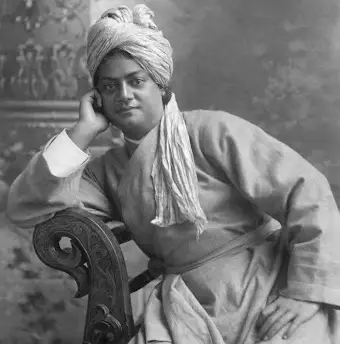
(image collected from https://vedantasociety.net/)
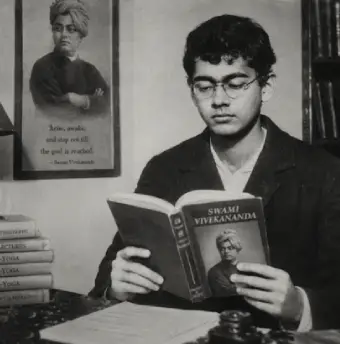
AI generated image
Declassified confidential reports on Swami Vivekananda by the British Govt.
- Bombay S.B Abstract (June 1892) says ‘Vivekanand’ is a title assumed by the Swamy, whose real name is not known. He is reported to be a native of Calcutta. It is not known how or when he became a Sannyasi. He was also said to be very clever, and, though a Sannyasi, to take an interest in politics. Nothing appears to be known of the doings of the Swami between the years 1892 and 1895.
- C.S.B Abstract (of 1895) says Vivekanand went to America to preach the ancient Hindu religion. Dr. H.S Linn, as Englishman, is said to have gone to America with the sole object of combating the Swami’s religious teachings.
- C.S.B Abstract (of 1896) says Vivekanand appears to have travelled very extensively in America and to have attracted a considerable amount of attention. Vivekanand intends to spend a summer in England.
(Source: Book ‘Vivekananda’s influence on Subhas’by Nanda Mookherjee, Ramakrishna Mission Institute of Culture)
Excerpts from the Sedition Committee Report of 1918
The excerpts from the Sedition Committee Report of 1918 (16 years after Swami Vivekananda’s death) states about Swami Vivekananda that Narendra Nath Dutta became an ascetic and attended the Parliament of Religions in Chicago as the representative of Hinduism. There he made a great impression and founded Vedanta societies for teaching of Hindu scriptures (Vedas). He returned to India in 1897 with a small band of followers, and was acclaimed by many educated Hindus as a savior and prophet of faith their faith. He recognized centres of Philanthropic and religious effort under the supervision of a Ramakrishna Mission and carrying much further the teachings of his master (Sri Ramakrishna) preached that Vedantism was the future religion of the world, and that , although India was now a subject to a foreign power, she must still be careful to preserve the faith of mankind. She must seek freedom by the aid of the Mother of Strength (Shakti).
Vivekananda died in 1902; but his writings and teachings survived him, have been popularized by the Ramakrishna Mission and have deeply impressed many educated Hindus. From much evidence before us it is apparent that this influence was perverted by Barindra (revolutionary leader Barindra Kumar Ghose) and his followers in order to create an atmosphere suitable for the execution of their projects.
(Source: Book ‘Vivekananda’s influence on Subhas’ by Nanda Mookherjee, Ramakrishna Mission Institute of Culture)
Nivedita of India
Margaret Elizabeth Noble was born on October 28, 1867 in Northern Ireland in a Christian religious family but when she met and heard Swami Vivekananda in 1895 in London, her life changed. Margaret accepted Vivekananda as her guru and she decided to come to India and serve the people of India. She left her motherland, friends, relatives to join Vivekananda’s task of nation-building in India. Swami Vivekananda gave her the name ‘Nivedita’, as he initiated her in the vow of ‘Bramhacharya’.
Sister Nivedita realized the truth of Swamiji’s words that the world’s good was dependent on the good of India and India’s spirituality would show the path of beneficence to the entire world. So she deemed her service to India to be the service to the entire mankind indeed. At Vivekananda’s wish Nivedita set up a girls’ school in Kolkata and stated the work of women’s education following the national ideal of India.
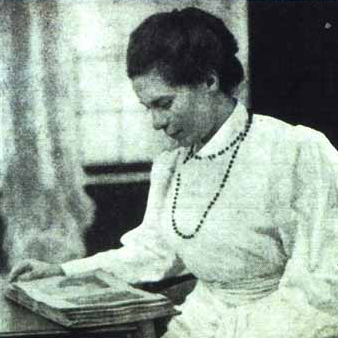
(this image is in public domain, collected from Wikipedia)
After Vivekananda’s demise in 1902, Nivedita took the task of Swamiji at her shoulders without wasting a single day. Moreover, she had also witnessed the British torture upon the Indians in the name of governance and she felt that India must get independence from the foreign rule to be in the path of development. She considered that the foreign rule was responsible for the weakness and moral degradation of the Indians. Nivedita associated herself in anti-British politics in her strong desire to free India. For getting associated with politics Nivedita even had to leave her formal relationship with Ramakrishna Mission and Ramakrishna Math. She almost travelled all parts of India carrying the banner of Vivekananda’s ideals, spreading nationalist ideas. People throughout India acknowledged her efforts as her sincere appeal and the spirit of patriotism. When the British repression reached extreme levels during the Swadeshi Movement after partition of Bengal in 1905, secret revolutionary societies were setup in Bengal and Sister Nivedita had close relations with Aurobindo Ghose and other revolutionary leaders. She helped the revolutionary organizations in their cause of fighting for India’s liberation. Sister Nivedita dedicated her entire life in the service of India and played a major role in awakening Indians to fight for India’s liberation from the foreign rule.
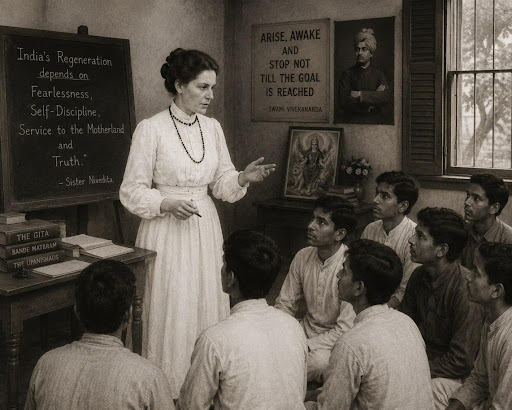
Tagore writes, where the mind is without fear…
Bengali literature emerged as one of the most powerful intellectual and cultural forces behind the Indian Independence Movement. It elevated the freedom struggle beyond the realm of politics, transforming it into a deep emotional, spiritual, and cultural awakening. Through inspiring novels, patriotic poems, revolutionary songs, and thought-provoking plays, Bengali writers like Bankim Chandra Chatterjee, Gurudev Rabindranath Tagore, later Dwijendralal Roy, Rajanikanta Sen and Kazi Nazrul Islam stirred the collective conscience of the nation, nurtured a shared sense of identity, and ignited an enduring spirit of patriotism and sacrifice among millions across India.
It was Sahitya Samrat Bankim Chandra Chattopadhyay whose landmark 1882 Bengali novel ‘Anandamath’ gifted India its first great nationalist mantra — “Vande Mataram.” Written in highly Sanskritised Bengali, the song envisioned the nation as a divine mother goddess, blending patriotism with spiritual devotion. Over time, Vande Mataram evolved into a powerful symbol of India’s freedom struggle, inspiring generations of revolutionaries and nationalists with its stirring call to serve and liberate the motherland.
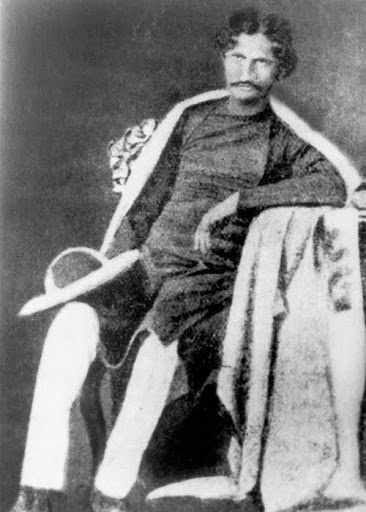
(this image is in public domain, collected from Wikipedia. By Chingaaribera – Own work, CC BY-SA 4.0, https://commons.wikimedia.org/w/index.php?curid=147248598)
Rabindranath Tagore profoundly transformed Bengali literature, music, and Indian art through his pioneering vision of Contextual Modernism during the late 19th and early 20th centuries. He was the creator of ‘Gitanjali’, a work celebrated for its deeply sensitive, lyrical, and timeless beauty, which earned him worldwide acclaim. He was the first Asian and first non-European person to a Nobel Prize.
Tagore’s poetry and songs carried a rare spiritual depth and emotional fluidity, while his elegant prose and enchanting literary style captivated readers across the Indian subcontinent and beyond. A fellow of the Royal Asiatic Society, he became globally revered as the cultural voice of Bengal and India alike. Affectionately known by honorifics such as Gurudev, Kabiguru, and Biswokabi (“Poet of the World”), Tagore remains one of the most influential literary and cultural figures in modern history. Tagore’s role in the independence movement was immense, his swadeshi songs like ‘ekla cholo re’, ‘o amar desher mati’, ‘Banglar mati Banglar jol’, ‘amar sonar Bangla’ influenced the anti-British movement. Tagore’s song ‘Jana Gana Mana’ is the national anthem of India and its Hindustani version ‘Shubh Sukh Chain’ was the national anthem of the Provisional Govt. of Free India, formed by Netaji Subhas Chandra Bose in 1943. The song ‘amar sonar Bangla’ written in 1905 was later adopted as national anthem of Bangladesh.
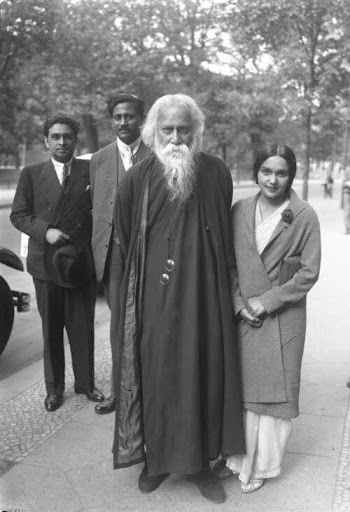
(this image is in public domain, collected from Wikipedia. By Bundesarchiv, Bild 102-11643 / CC-BY-SA 3.0, CC BY-SA 3.0 de, https://commons.wikimedia.org/w/index.php?curid=5415406)
Famous letter written by Gurudev Rabindranath Tagore, renouncing his Knighthood as a mark of protest for the Jallianwala Bagh massacre in 1919
Calcutta
31 May 1919
Your Excellency,
The enormity of the measures taken by the Government in the Punjab for quelling some local
disturbances has, with a rude shock, revealed to our minds the helplessness of our position as
British subjects in India. The disproportionate severity of the punishments inflicted upon the
unfortunate people and the methods of carrying them out, we are convinced, are without
parallel in the history of civilised governments, barring some conspicuous exceptions, recent
and remote. Considering that such treatment has been meted out to a population, disarmed
and resourceless, by a power which has the most terribly efficient organisation for destruction
of human lives, we must strongly assert that it can claim no political expediency, far less
moral justification.
The accounts of the insults and sufferings by our brothers in Punjab have trickled through the
gagged silence, reaching every corner of India, and the universal agony of indignation roused
in the hearts of our people has been ignored by our rulers-possibly congratulating themselves
for what they imagine as salutary lessons. This callousness has been praised by most of the
Anglo-Indian papers, which have in some cases gone to the brutal length of making fun of
our sufferings, without receiving the least check from the same authority-relentlessly careful
in smothering every cry of pain and expression of judgement from the organs representing the
sufferers.
Knowing that our appeals have been in vain and that the passion of vengeance is blinding the
nobler vision of statesmanship in our Government, which could so easily afford to be
magnanimous as befitting its physical strength and moral tradition, the very least that I can do
for my country is to take all consequences upon myself in giving voice to the protest of the
millions of my countrymen, surprised into a dumb anguish of terror. The time has come when
badges of honour make our shame glaring in the incongruous context of humiliation, and I for
my part wish to stand, shorn of all special distinctions, by the side of those of my
countrymen, who, for their so-called insignificance, are liable to suffer degradation not fit for
human beings.
These are the reasons which have painfully compelled me to ask Your Excellency, with due
reference and regret, to relieve me of my title of Knighthood, which I had the honour to
accept from His Majesty the King at the hands of your predecessor, for whose nobleness of
heart I still entertain great admiration.
Yours faithfully,
Rabindranath Tagore
Source: Krishna Dutta and Andrew Robinson, eds.,
Selected Letters of Rabindranath Tagore
(Cambridge: Cambridge University Press, 1997)
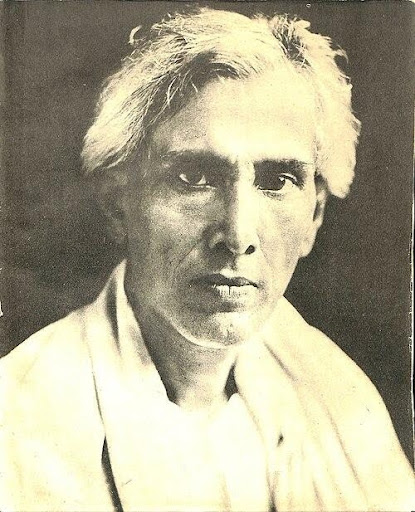
Sarat Chandra Chattopadhyay (1876–1938) was one of the most eminent figures in Bengali and Indian literature. Through his novels and short stories, he not only portrayed the social realities and struggles of his time but also inspired the spirit of resistance against colonial rule. His celebrated novel, Pather Dabi, published in 1926, revolves around a secret revolutionary organization named Pather Dabi, whose objective is to liberate India from British domination. The novel vividly reflects the aspirations, sacrifices, and revolutionary fervour of those engaged in the struggle for national freedom.
Sarat Chandra’s writings played a significant role in shaping the minds of young Indians and awakening nationalist consciousness among them. His works encouraged readers to challenge oppression, fight injustice, and strive for freedom and dignity. By emphasizing the importance of self-respect, unity, and patriotism, he helped foster an independent spirit among Indians during the freedom movement. Sarat Chandra firmly believed that political independence was essential for the nation’s progress and repeatedly conveyed through his writings that freedom was the only path to India’s salvation from colonial exploitation and subjugation.
(this image is in public domain, collected from Wikimedia, By Unknown author – Manik Mukhopadhyay; Satyabrata Toy (1977). The Golden Book of Saratchandra. All Bengal Sarat Centenary Committee. p. v., Public Domain, https://commons.wikimedia.org/w/index.php?curid=83494792)
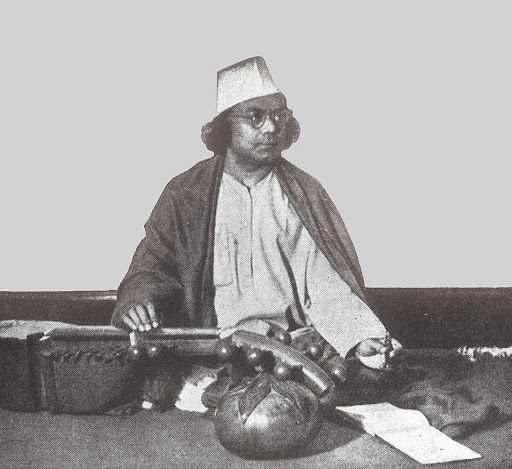
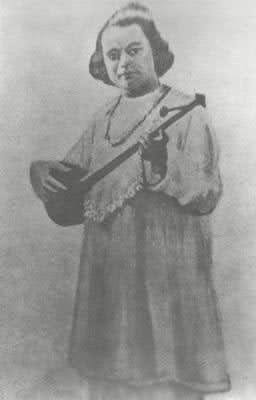
Kazi Nazrul Islam (1899–1976), popularly known as the Bidrohi Kobi (Rebel Poet) of Bengali literature, earned this distinguished title for both his revolutionary poem Bidrohi (“The Rebel”) and his uncompromising opposition to British colonial rule. A fearless patriot, Nazrul used his pen as a weapon against oppression, injustice, and imperial domination. His powerful writings advocating political freedom, social equality, and human dignity led to charges of sedition by the British colonial government. He was imprisoned and subjected to harsh treatment, yet his spirit remained unbroken.
(this image is in Public domain, collected from Wikipedia. By Unknown author – Nazrul Academy, Public Domain, https://commons.wikimedia.org/w/index.php?curid=50874511)
(this image is public domain, collected from Wikipedia. By Unknown author – http://www.dhakamirror.com/art-culture/nazrul-in-films/https://www.youtube.com/watch?v=z2hBLSCdDLc, Public Domain, https://commons.wikimedia.org/w/index.php?curid=29134101)
Nazrul’s poems, songs, and essays became a source of inspiration for India’s nationalist movement and particularly for revolutionary youth fighting against British rule. During his imprisonment, he continued to compose numerous poems and songs that reflected his indomitable courage and commitment to freedom. Alarmed by the influence of his writings, the British Indian government banned several of his works during the 1920s.
In recognition of his extraordinary literary talent and patriotic spirit, Rabindranath Tagore dedicated his play Basanta to Nazrul in 1923. In response, Nazrul expressed his gratitude through the poem Aj Srishti Shukher Ullashe. His renowned collection of poems, Bisher Banshi (The Flute of Poison), published in August 1924, was banned by the British Raj because of its passionate call for resistance against colonial oppression and its appeal to the people of India to rise against foreign rule. Despite the ban, the book continued to circulate secretly and was widely read, further strengthening the spirit of nationalism and resistance among Indians.
Through his revolutionary literature and unwavering patriotism, Kazi Nazrul Islam emerged as one of the most influential voices of India’s freedom struggle, inspiring generations to challenge injustice and uphold the ideals of liberty, equality, and human dignity.