Gadar Movement-Bagha Jatin Gallery
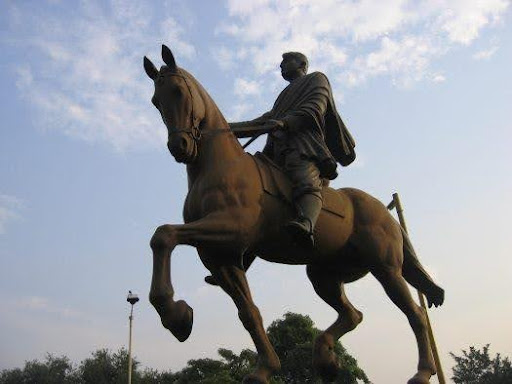
Eminent revolutionary freedom fighter M. N. Roy wrote after the death of Jatindranath Mukherjee or Bagha Jatin : “I could not forget the injunction of the only man I ever obeyed almost blindly Jatinda’s heroic death must be avenged. Only a year had passed since then. But in the meantime, I had come to realise that I admired Jatinda because he personified, perhaps without himself knowing it, the best of mankind. The corollary to that realisation was that Jatinda’s death would be avenged if I worked for the ideal of establishing a social order in which the best in man could be manifest.”
BAGHA JATIN – THE MAKING OF A REVOLUTIONARY
Jatindranath Mukherjee (1879 – 1915), remembered in history as Bagha Jatin, was one of the most remarkable leaders of the armed revolutionary movement against British rule in India. He played a decisive role in transforming scattered secret societies in Bengal into an organised revolutionary network with national and international connections. Jatin was born in Kayagram, a village in Kushtia in Bengal (in present day Bangladesh) on December 7, 1879.
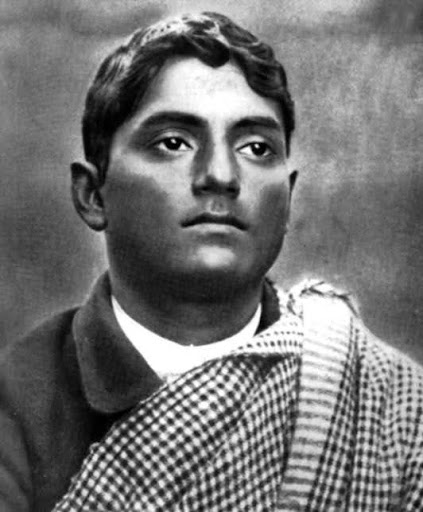
(this image is in public domain, collected from Wikipedia)
He combined physical courage, deep patriotism, and exceptional organisational ability. His leadership marked the transition of the revolutionary movement from isolated acts of resistance to planned insurrection. Bagha Jatin believed that political freedom could not be obtained without sacrifice, discipline, and preparation for armed struggle. His life and death became a symbol of fearless resistance against colonial domination.
CHILDHOOD, EDUCATION, FORMATIVE INFLUENCES & THE NAME “BAGHA”
Bagha Jatin’s father died when he was very young, and he was raised by his mother Saratshashi Devi, who greatly influenced his character with stories of courage and sacrifice.
He studied at Krishnanagar Collegiate School and later in Kolkata. From an early age he showed interest in physical training, wrestling, and horse riding, which were encouraged among nationalist youth as a way to build strength and discipline.
During his youth, Bengal was witnessing the growth of nationalist thought inspired by leaders such as
Swami Vivekananda,
Bankim Chandra Chattopadhyay, and
Sri Aurobindo.
These ideas shaped Jatin’s belief that freedom required both spiritual strength and physical courage.
Jatindranath Mukherjee earned the name Bagha (Tiger) after a famous incident in which he fought and killed a tiger with a dagger while protecting villagers.
The event, widely reported in Bengal, made him a legend during his lifetime.
Whether retold with embellishment or not, the story reflected his reputation for extraordinary courage. Among revolutionaries, the name Bagha Jatin became synonymous with bravery, self-control, and leadership.
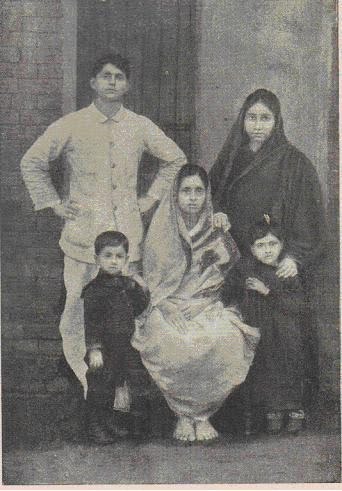
(Image collected from Wikipedia, by Dr Prithwindra Mukherjee – Prithwindra Mukherjee Archives, CC BY-SA 3.0, https://commons.wikimedia.org/w/index.php?curid=3235556)
ENTRY INTO THE REVOLUTIONARY MOVEMENT
Bagha Jatin after completion his studies got employment in govt. service. On the other hand, at the beginning of the 20th century, Bengal became the centre of revolutionary activities. Jatin came into contact with members of the Anushilan Samiti, a secret society promoting physical training and nationalist ideas. He later became associated with the Jugantar group, founded by revolutionaries including Barindra Kumar Ghosh and Aurobindo Ghosh.
After the arrest of many leaders following the Alipore Bomb Case, Bagha Jatin gradually emerged as one of the principal organisers of the underground movement. He focused on discipline, secrecy, and long-term preparation rather than isolated attacks.
REORGANISING THE REVOLUTIONARY NETWORK
Between 1908 and 1914, Bagha Jatin reorganised the revolutionary movement across eastern India.
He built contacts in:
- Bengal
- Bihar
- Odisha
- United Provinces
- Punjab
He also established links with Indian revolutionaries abroad, especially those connected with the Ghadar Party.
British intelligence reports described him as one of the most dangerous revolutionary leaders in India.
He was arrested in connection with the Howrah Conspiracy Case, but lack of evidence led to his release, allowing him to continue his work secretly.
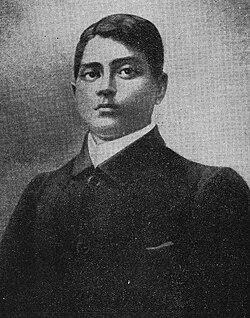
Howrah Conspiracy Case
On January 24, 1910 in Kolkata, 47 Indian nationalists of the Anushilan Samiti were arrested and tried in the wake of the murder of Inspector Shamsul Alam. Alam was Deputy superintendent and intelligence officer in Bengal Police investigating the murder of Naren Gosain, crown-witness in the Alipore Bomb Case, and other murders including those of Ashutosh Biswas, advocate of Calcutta High Court in charge of prosecution of Gossain murder case, and of Naren Bannerjee, the police officer who arrested Khudiram Bose. Alam had uncovered the underlying Bengali revolutionary network of the Anushilan Samiti that linked the murders and other robberies around this time. On February 24, 1910, in broad daylight in the verandah of the Kolkata High Court, young revolutionary Biren Dutta Gupta shot Samsul Alam at the Point Blank Range and Alam was killed. Unfortunately, the court guards were able to catch Biren. He did not divulge any secret information during the police interrogation and even refused to take the help of a lawyer to defend himself during the trial. Justice Lawrence Jenkins appointed Barrister Nishit Sen as the defense counsel. Biren, the fearless revolutionary was hanged on February 21, 1910 in Alipore Jail. The administration was forced to release 33 of the 48 imprisoned revolutionaries, including Bagha Jatin due to lack of evidences.
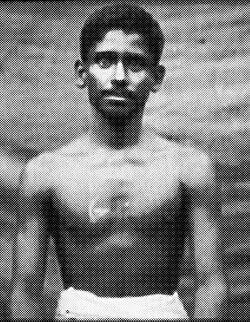
Biren was born on 20 June 1889 in the village of Baligaon in Bikrampur, Dhaka. He later came to Kolkata and was inspired by the ideology of Revolutionary Kanailal Dutta and became involved in active revolutionary activities. During this time he associated himself with revolutionary activities as a disciple of Jatindranath Mukherjee alias Bagha Jatin
WORLD WAR I AND THE INDO–GERMAN PLAN
After Bagha Jatin’s release from jail in 1911, in a big breakthrough he met the German Crown Prince, during the prince’s visit to Kolkata and received a promise about arms supply. Jatin established contacts with Rashbehari Bose, Lala Hardayal in North India and reorganised Jugantar Party. Attempts were now made to organise expatriate Indian revolutionaries in Europe and the United States, by taking advantage of the First World War.
Bagha Jatin was one of the major architects of the plan for a large uprising with the support of Germany, Britain’s enemy in the war.
This plan aimed to:
- Bring arms by sea to the eastern coast of India
- Encourage revolt in the British Indian Army (among the Indian army men)
- Coordinate rebellions across different provinces
This international plan is known as the Indo-German Plan or the Hindu-German Plan. However, British intelligence intercepted communications, police began a massive search for the revolutionaries involved.
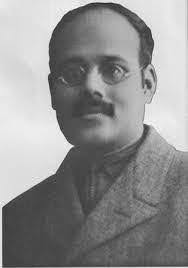
He was an Indian Revolutionary freedom fighter. Har Dayan was a polymath and he inspired many expatriate Indians living in Canada and the U.S. in their campaign against British rule in India during the First World War
THE LAST FIGHT
Increasing police activities to prevent any uprising, eminent Jugantar members suggested that Jatin should move to a safer place. Balasore on the Odisha coast was selected as a suitable place, being very near the spot where German arms were to be landed for the Indian rising. To facilitate transmission of information to Bagha Jatin, a business house under the name “Universal Emporium” was set up, as a branch of Harry & Sons in Calcutta, which had been created for keeping contacts with revolutionaries abroad.
In April 1915, after meeting with Jatin, Naren Bhattacharya (the future M. N. Roy) went to Jakarta, to meet the German authorities concerning financial aid and the supply of arms.
Naren got the assurance that a cargo of arms and ammunition was already on its way, “to assist the Indians in a revolution”.
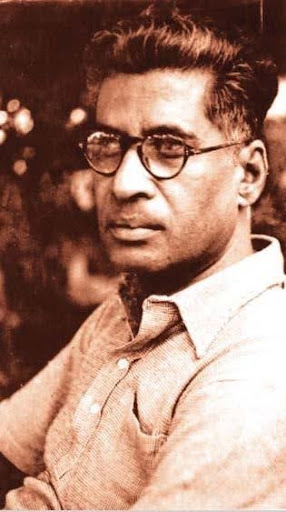
Roy was an eminent revolutionary, a philosopher and a political theorist, he was born on March 21, 1887 in Arbelia, now North 24 Parganas, Bengal. Many Indian nationalists, including Roy, were of the opinion that only through a revolution they would be able to achieve India’s independence from the British Empire. Revolutionary nationalists looked to a rival imperial power like Germany, as a potential source for funds and weapons. Roy took the task of visiting many foreign nations and to collaborate with the German officials for this plan.
“Amra morbo, jagat jagbe” (As we die, the world will awaken)
— Bagha Jatin
A network of Czech and Slovak revolutionaries and emigrants had a role in the uncovering of Bagha Jatin’s plans. Its members in the United States, headed by E. V. Voska were, as Habsburg subjects, presumed to be German supporters, but were actually involved in spying on German and Austrian diplomats.
The Kolkata Police intelligence department under Charles Tegart got the information that Bagha Jatin was about to reach Balasore to receive a German consignment of arms. The heavily armed police force reached Balasore in Odisha and Bagha Jatin and his associates were not prepared for this. The Indo-German Plan failed as no consignment of arms reached the shores of Balasore. However, Bagha Jatin and his associates had to fight against the heavily armed police force. After a fierce gun battle (famously known as ‘Battle of Balasore’), where, as per witnesses around 25 policemen were killed. Bagha Jatin and associate Jyotish Pal got seriously wounded, Chittapriya Ray Chaudhuri was killed on the spot and Manoranjan Sengupta and Nirendranath Dasgupta were captured by the police.
On September 10, 1915, the great soul Jatindranath Mukherjee or Bagha Jatin sacrificed his life for the liberation of his motherland at the Balasore hospital, his associates Sengupta and Niren were hanged at Balasore district jail. Bagha Jatin’s contributions and his sacrifice will always remain as one of the greatest milestones in the history of India’s freedom struggle to eliminate the foreign rule. While paying tribute to Jatin by his biggest enemy Charles Tegart, the Intelligence Chief and Police Commissioner of Bengal said, “Though I had to do my duty, I have a great admiration for him. He died in an open fight.”
It is said that Tegart himself is claimed to have told his colleagues that if Jatin were an Englishman, then the English people would have built his statue next to Nelson’s at Trafalgar Square. In a 1926 note to J. E. Francis of the India Office in London, he described Bengali revolutionaries as “the most selfless political workers in India”.
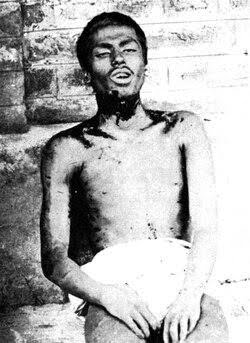
(image collected from Wikipedia)
Chittabrata was martyred at the age of twenty years, he was born in the Madaripur subdivision of Faridpur district in Bengal (now in Bangladesh). In Madaripur, Ray Chaudhuri with his friends Manoranjan Sengupta and Nirendranath Dasgupta joined the secret society of Purnachandra Das, Madaripur Samiti. They took part in swadeshi dacoities led by him; were arrested and all were tried in the Faridpur Conspiracy Case (1913), but were released. In 1914, Purna Das accepted Bagha Jatin’s revolutionary line of a united armed assault on the British with arms support from Germany. From Faridpur, he sent his best boys, Chittapriya, Manoranjan, and Nirendranath to him.
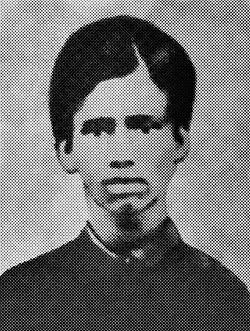
(image collected from Wikipedia)
Sengupta was born in September 1898 in the village of Khairbhanga, Madaripur, Bengal (now Bangladesh). He was a member of the revolutionary society Madaripur Samiti and was arrested during the Balasore gun-battle. On December 3, 1915 at an age of 16, Sengupta was executed by hanging
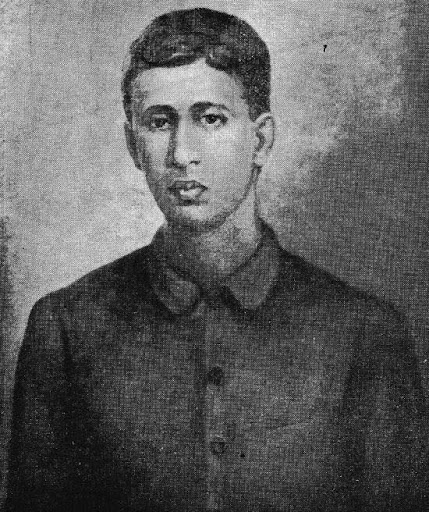
(image collected from Wikipedia)
Dasgupta was born in 1886 in Madaripur, Bengal (now Bangladesh). He was member of the revolutionary group Madaripur Samiti. He was arrested in the Balasore gun-battle and was executed by hanging in October 1915
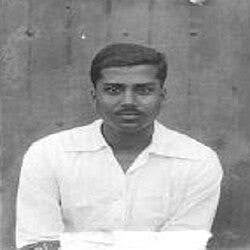
(image collected from Wikipedia)
The revolutionary was born in Nadia district of Bengal. He was a member of the Jugantar Party under Bagha Jatin. He was arrested during the Balasore gun-battle and was sentenced to the Andamans. Due to the inhuman torture at the Cellular Jail, Pal became insane and he died at an early age in December 4, 1924