Fiery Medinipur Gallery
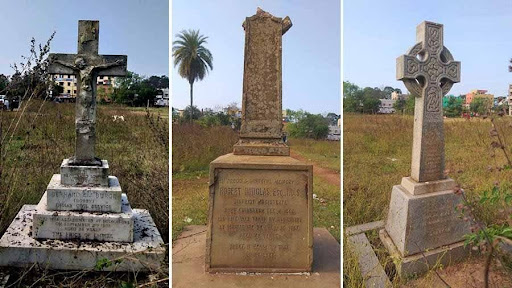
(image collected from telegraphindia.com)
In the compound of St. John’s Church in Midnapore, three graves lie in utter neglect. In these graves lie three young British District Magistrates of Midnapore, who were all assassinated in a row, between 1931 and 1933, by Bengali revolutionists. These three assassinations, occurring in a span of three years in the same town, sent shockwaves across colonial India. Fear spread rapidly through the ranks of the British administration. So deep was the terror that followed, that no officer of the Indian Civil Service dared to take charge of Midnapore.
MIDNAPUR – A LAND OF REVOLUTION
The district of Midnapur (Medinipur) in Bengal played a remarkable role in the history of India’s struggle for independence. From the late nineteenth century to the final phase of the freedom movement, the region produced an extraordinary number of revolutionaries, organisers, and martyrs. British reports called it “one of the most violent districts” due to political assassinations, sabotage, and underground networks.
The district became a stronghold of the Bengali revolutionary movement due to:
- Spread of nationalist education
- Growth of physical culture clubs
- Influence of secret revolutionary societies
- Strong rural networks resistant to colonial authority
Midnapur’s revolutionary tradition connected local resistance with the wider movement led by organisations such as Anushilan Samiti and Jugantar.
The people of Midnapur participated in both armed revolution and mass nationalist movements, making the district one of the most politically active regions in Bengal.
In the late 1800s, local schools like Midnapore Collegiate School and later Tamluk Hamilton High School became intellectual hubs. Teachers quietly introduced nationalist thought, while secret societies recruited promising students.
Figures like Hem Chandra Kanungo, born in Radhanagar, Paschim Medinipur who was trained in Paris in bomb-making and made a bomb making workshop in Muraripukur, Kolkata inspired many.
EARLY NATIONALIST INFLUENCE IN MIDNAPUR
The roots of revolutionary activity in Midnapur can be traced to the Swadeshi Movement (1905–1908) following the Partition of Bengal.
Students, teachers, and local leaders organised:
- National schools
- Boycott of British goods
- Physical training centres
- Secret political groups
The ideas of leaders such as
Aurobindo Ghosh,
Bal Gangadhar Tilak, and
Swami Vivekananda
inspired young men of Midnapur to believe that independence must be achieved through courage and sacrifice.
By the early 20th century, revolutionary networks had spread into towns and villages across the district. During the early twentieth century, several revolutionary actions were linked to Midnapur district.
Young revolutionaries took part in:
- Attempts on British officials
- Arms collection
- Secret training camps
- Support for underground leaders
The revolutionary spirit of Bengal, represented by figures such as Khudiram Bose greatly influenced the youth of Midnapur.
The district became known for its readiness to support those who chose the path of armed resistance.
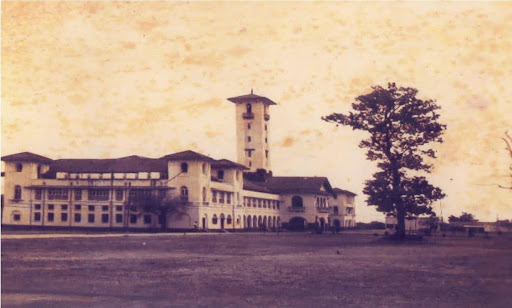
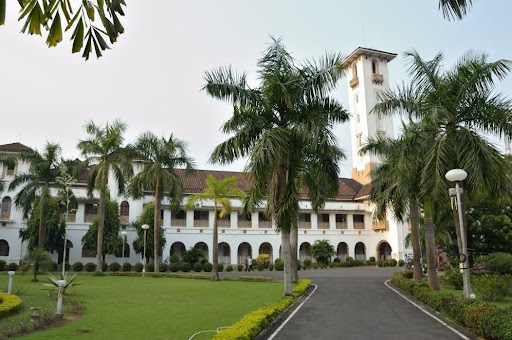
HIJLI DETENTION CAMP AND REVOLUTIONARY PRISONERS
The British established the Hijli Detention Camp in Midnapur to imprison political activists without trial.
Many revolutionaries from Bengal were held here during the 1930s. In 1931, police firing inside the camp killed two detenues, Santosh Kumar Mitra and Tarakeswar Sengupta causing widespread anger across India. The incident strengthened the resolve of the revolutionary movement and made Midnapur a symbol of sacrifice and resistance.
Today the site is remembered as a place connected with both repression and courage.
THE MIDNAPUR MAGISTRATE ASSASSINATIONS (1931–1933)
During the early 1930s, the district of Midnapur became the scene of a series of daring revolutionary actions in which British district magistrates were assassinated by young members of the nationalist underground. These incidents formed part of the activities of the revolutionary organisation Bengal Volunteers, which played an important role in Bengal during the Civil Disobedience era.
The assassinations were carried out in protest against harsh repression, police brutality, and the imprisonment of nationalist workers. Midnapur, already known for its strong revolutionary tradition, became one of the most difficult districts for the colonial administration to control.
THE ASSASSINATION OF JAMES PEDDIE (1931)
In April 1931, James Peddie, the District Magistrate of Midnapur, was shot dead by revolutionary youths while attending a public event. James Peddie, a 38-year-old ICS officer from Springfield, was appointed as the DM of Midnapore. He adopted oppressive measures to curb revolutionary influence. Peddie ensured that Midnapore remained free of any revolutionary influence and this led to wanton arrests, raids and Draconian measures on common people.
The attack was planned by members of the Bengal Volunteers, who believed that British officials responsible for repression should be punished. Young revolutionaries, Bimal Dasgupta and Jyotijeevan Ghosh were selected for the job. The incident shocked the colonial government and led to increased surveillance and arrests across the district.
Despite strict security measures, revolutionary activity continued.
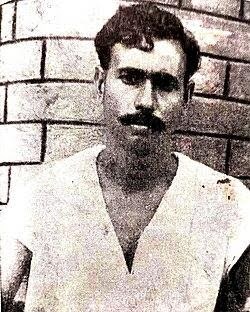
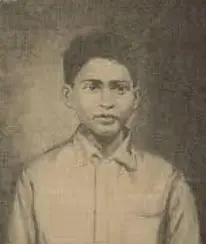
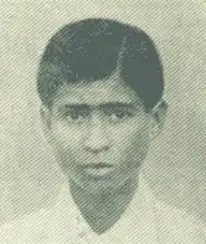
Bimal Dasgupta was born in Jhalokati in Barishal, Bengal (now Bangladesh) on April 19, 1910. His family permanently settled in Midnapore when he was only 4 years old. Dasgupta was a member of the revolutionary group Bengal Volunteers and he along with Jyotijeevan Ghosh assassinated District Magistrate Peddie in 1931
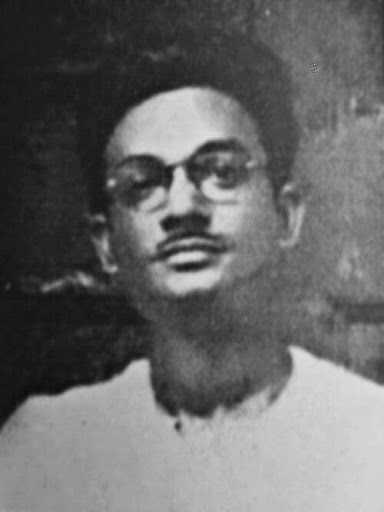
Jyoti Jibon Ghosh was born in Hooghly district of Bengal was a member of the revolutionary group Bengal Volunteers
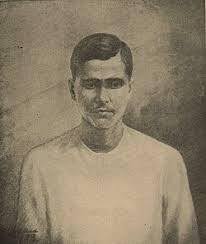
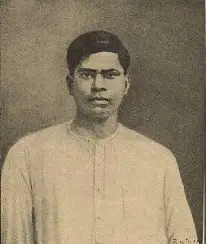
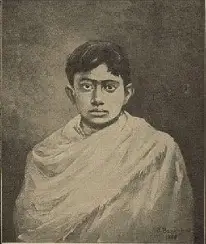
THE ASSASSINATION OF ROBERT DOUGLAS (1932)
After Peddie’s death, Midnapore welcomed a new District Magistrate by the name of Robert Douglas, a 42-year-old Scotsman, who was also a good cricketer. Douglas embraced a policy that surpassed even Peddie’s brutality. It was under his watch that a tragic incident occurred — an open fire on the prisoners of Hijli jail on September 16, 1931, resulting in the loss of the lives of Tarakeshwar Sen and Santosh Kumar Mitra.
The incident caused huge anger in Bengal, it upset Gurudev Rabindranath Tagore and he joined the protest meeting in Kolkata maidan and wrote a strong letter to the editor of The Statesman as the paper was blindly supporting Douglas’s decision of firing. Surprisingly the letter written by Tagore was returned to him by The Statesman editorial office saying it was unfit to publish in the paper. This is perhaps the only write up of Tagore that was rejected by a newspaper house when he was at the zenith of the literary world. Tagore, in the protest of this firing, wrote his epochal Bengali poem, Prashna (The Question).
Seeing the oppressive attitude of Douglas, Bengal Volunteers awarded him death and this task was given to Pradyut Bhattacharya and Prabhangshu Shekhar Pal. It was tough to reach out to the magistrate, as his security heavily tightened, but a pivotal opportunity came on April 30, 1932. Both the young men entered DM’s office through the rear entrance. Stealthily making their way into the meeting room, they discovered Douglas seated with his back to the door. Swiftly and decisively, the two boys unleashed a barrage of bullets into Douglas’s neck and head, ending his life within a matter of seconds. The boys swiftly fled the scene, yet Pradyut was apprehended and taken into custody. He met his demise through execution at Midnapore Central Jail on January 12, 1933. Prabhangshu, on the other hand, faced arrest at a later time and endured a six-year prison term.
British authorities responded with raids, detentions, and special laws, but the spirit of resistance in the district remained strong.
THE ASSASSINATION OF B. E. J. BURGE (1933)
38-year-old man named Bernard EJ Berge, affectionately known as Bobby to his friends and family courageously stepped into the role of Midnapore’s District Magistrate. It was a duty that any of his fellow batchmates would likely have avoided during that period. Relocating to Midnapore with his wife and daughter, Berge’s security became a personal priority for his wife, who undertook thorough interviews before permitting anyone to meet him.
Berge, an keen football buff and former captain of the Ballygunge Cricket Club, once made the decision to participate in a football match at the Midnapore football ground. On September 2, 1933, the ground was fully packed, Berge and his security team showed a sense of overconfidence, convinced that no harm could possibly come to them in a public setting, particularly on a football field. Young members of Bengal Volunteers Brajo Kishore Chakraborty, aged 20; Ram Krishna Roy, also 20; the 17-year-old Nirmal Jeevan Ghosh; Mrigen Dutta and Anathbandhu Panja, aged 22, who had undergone training in Kolkata and had arrived in Midnapore armed with firearms. The group was led by Brajo Kishore, an active member of the Midnapore revolutionary faction.
As Berge got off from his car, en route to the police football ground, he was met with a sudden onslaught of eight bullets fired from an alarmingly close distance. Amid the turmoil, two police officers from Berge’s security detail, Philip Norton and Charles Oliver Smith, retaliated with their own gunfire. The exchange resulted in the immediate death of Anathbandhu and wounded Mrigen, who died the following day at the hospital. The remaining three assailants were swiftly subdued by a resolute local crowd.
All three were held by police and sentenced to death on November 3, 1933. Brajo Kishore and Ram Krishna were hanged on October 25, 1934 and Nirmal was hanged the next day within the confines of Midnapore Central Jail. Additional valiant souls implicated in this case, such as Sukumar Sengupta, Nandadulal Singh, Shanti Gopal Sen, and Kamakhya Charan Ghosh, received life imprisonment sentences.
HISTORICAL SIGNIFICANCE
The Midnapur magistrate assassinations showed that revolutionary activity in Bengal had not ended after the earlier phase of the movement.
These actions:
- Demonstrated the continued influence of Jugantar traditions
- Inspired young nationalists across Bengal
- Exposed the depth of anti-colonial feeling in rural districts
- Led to stricter British security measures
Midnapur’s reputation as a centre of resistance grew stronger, and the district later played a major role in the Quit India Movement and the formation of the Tamralipta National Government (1942).
The events in Midnapur illustrate the intensity of the struggle for independence in Bengal.
They also show that the freedom movement included both mass protest and underground revolutionary action. The courage and sacrifice of the young revolutionaries of Midnapur remain an important part of India’s national history.
The most dramatic incident occurred in September 1933, when District Magistrate B. E. J. Burge was shot during a football match in Midnapur.
Two young revolutionaries —
Anathbandhu Panja and
Mrigen Dutta —
carried out the attack in broad daylight.
The event created a sensation throughout India and Britain.
The colonial government described Midnapur as one of the most dangerous districts in Bengal, while many nationalists regarded the revolutionaries as martyrs who sacrificed their lives for freedom.