
Celebrating the poets, writers and thinkers who inspired India's freedom movement.
Famous letter written by Gurudev Rabindranath Tagore, renouncing his Knighthood as a mark of protest for the Jallianwala Bagh massacre in 1919
Calcutta, 31 May 1919
Your Excellency,
The enormity of the measures taken by the Government in the Punjab for quelling some local disturbances has, with a rude shock, revealed to our minds the helplessness of our position as British subjects in India. The disproportionate severity of the punishments inflicted upon the unfortunate people and the methods of carrying them out, we are convinced, are without parallel in the history of civilised governments, barring some conspicuous exceptions, recent and remote. Considering that such treatment has been meted out to a population, disarmed and resourceless, by a power which has the most terribly efficient organisation for destruction of human lives, we must strongly assert that it can claim no political expediency, far less moral justification.
The accounts of the insults and sufferings by our brothers in Punjab have trickled through the gagged silence, reaching every corner of India, and the universal agony of indignation roused in the hearts of our people has been ignored by our rulers — possibly congratulating themselves for what they imagine as salutary lessons.
The time has come when badges of honour make our shame glaring in the incongruous context of humiliation, and I for my part wish to stand, shorn of all special distinctions, by the side of those of my countrymen, who, for their so-called insignificance, are liable to suffer degradation not fit for human beings.
Yours faithfully,
Rabindranath Tagore
Source: Krishna Dutta and Andrew Robinson, eds., Selected Letters of Rabindranath Tagore (Cambridge: Cambridge University Press, 1997)
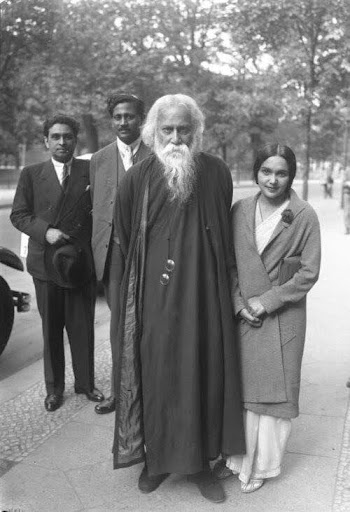
Gurudev Rabindranath Tagore — renounced his Knighthood in 1919 as protest against the Jallianwala Bagh massacre. First recited Vande Mataram at the 1896 Calcutta Congress. Wrote the epochal poem "Prashna" (The Question) protesting the Hijli Detention Camp firing.
(this portrait is in public domain, collected from Wikipedia)
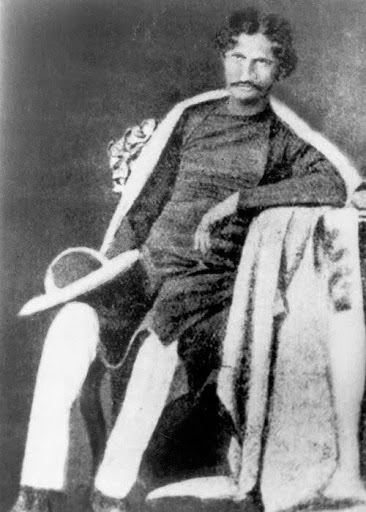
Author of Anandamath (1882) in which the song Vande Mataram appeared. His literary genius ignited the flame of nationalism that would burn for generations.
(this portrait is in public domain, collected from Wikipedia)
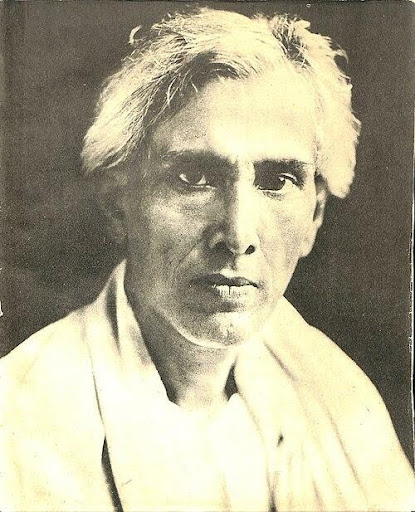
Renowned Bengali novelist whose works reflected the social and political struggles of colonial Bengal, inspiring revolutionary thought among the masses.
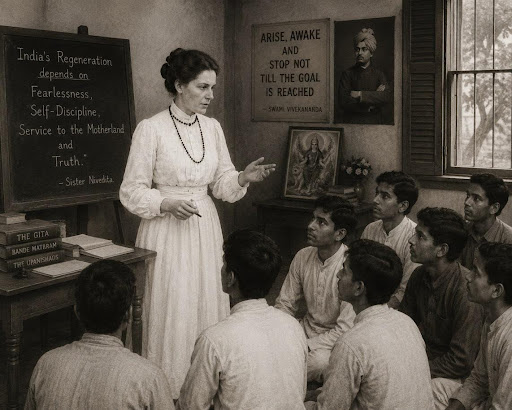
Margaret Elizabeth Noble — disciple of Swami Vivekananda. An Irish–Indian philosopher, educator, writer, social activist and one of the greatest inspirational figures of the Indian freedom movement, who dedicated her life for the service of the people of India.
(AI-generated image depicting her inspiring young revolutionaries)