Netaji Subhas Gallery
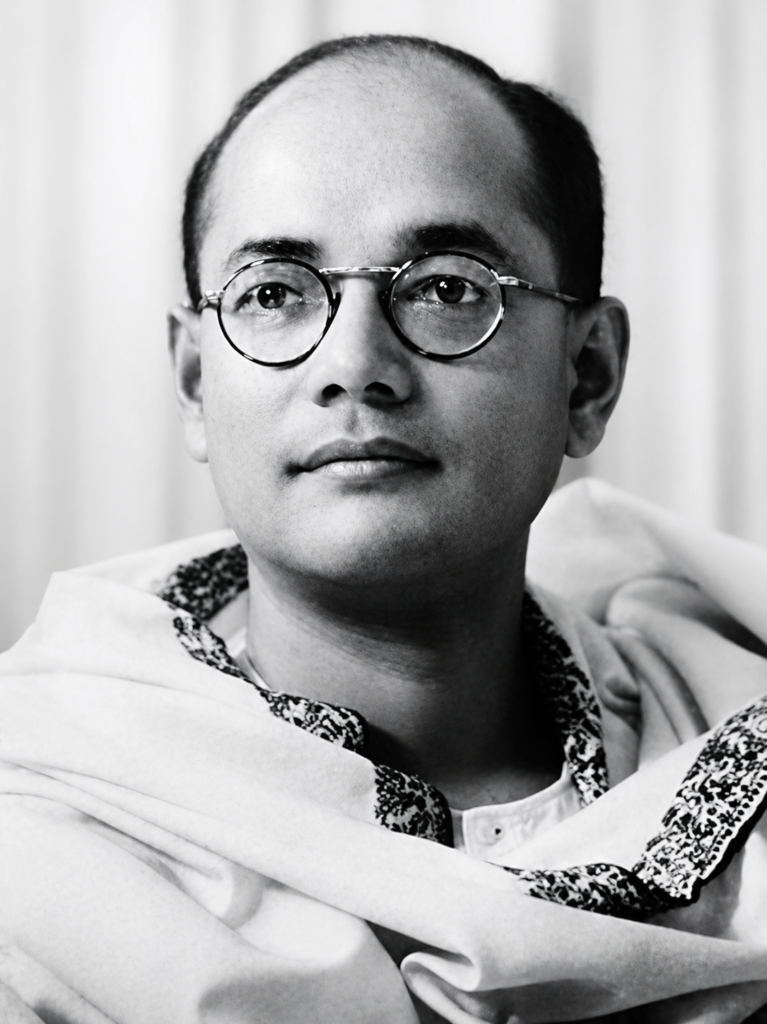
(image collected from Wikipedia)
“Give me blood, and I shall give you freedom!”- Netaji Subhas Chnadra Bose His words continue to inspire, emphasizing action over words, absolute dedication, and the refusal to accept colonial rule.
Former British Prime Minister Clement Attlee, during whose tenure India’s independence happened, visited India in 1956 and he stayed at the Kolkata Raj Bhavan for two days. During that time, the then Governor of West Bengal Justice P.B Chakraborty asked his guest some direct question on the reasons for granting independence to India in 1947. In reply Attlee cited several reasons, the principal among them being the erosion of loyalty to the British crown among the Indian army and navy personnel as a result of the military activities of Netaji Subhas Chandra Bose.
The leader was born in Cuttack
One of the greatest revolutionary freedom fighters in the history of the world, who led his revolutionary army fight for India’s liberation from British colonial rule, Netaji Subhas Chandra Bose was born in Cuttack (in present day Odisha) on January 23, 1897 in to an affluent Bengali family. His parents were Prabhabati Devi, mother and father and Janakinath Bose. Janakinath’s family was originally from Kodalia village in present day South 24 Pargana district of West Bengal, now known as Subhasgram. Jankinath, a successful lawyer in Cuttack and was the first Chairman of Cuttack Municipality. Subhas was the ninth child and the sixth son.
Following his five older brothers, Subhas entered the Baptist Mission’s Protestant European School in Cuttack in January 1902. It was an English medium school and most of the students being European or Anglo-Indians. The curriculum included Latin, British geography, and British History but no Indian languages were taught. In 1909, the 12-year-old Subhas joined the Ravenshaw Collegiate School in Cuttack and he was happy as he there he could also learn Bengali and Sanskrit. In his auto-biography “An Indian Pilgrim” he mentioned about his experiences in this school. Subhas was also very much inspired by the teachings of the Head Master, Benimadhab Das.
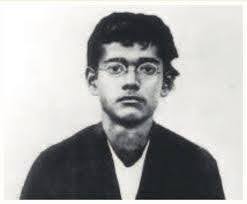
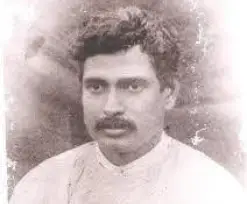
(image collected from Wikipedia)
Young Subhas Chandra Bose was also inspired by the teachings of Sri Ramakrishna and Swami Vivekananda and in fact, Bose considered Swami Vivekananda as his spiritual guru. Subhas was a brilliant student and from a very early age he also experienced spiritual growth for which his mother’s teachings at home was responsible.
A documentary on the childhood days of Subhas Chandra Bose in Cuttack
Dared to leave the lucrative ICS
In 1913 Subhas took admission in the Presidency College in Kolkata but in February 1916, Bose was alleged to have either planned or participated in an incident involving Professor E. F. Oaten. Before this, it was claimed by students that Oaten had made disparaging remarks about Indian culture and had also collared and pushed some students. Later, on February 15, a group of students reportedly approached Oaten, surrounded him, struck him with sandals, and dispersed. An inquiry committee was subsequently constituted, although Oaten was unable to identify his assailants, a college servant testified that he had seen Subhas Bose and his classmate Ananga Dam among those fleeing the scene, thereby confirming for the authorities what had already been circulating as rumour among the students. Consequently, both Bose and Ananga Dam were expelled from the college and rusticated from University of Calcutta.
The incident created a considerable stir in Kolkata and later with the intervention of Sir Ashutosh Mukherjee, the then Vice-Chancellor of Calcutta University, the Syndicate of Calcutta University permitted him to resume his studies, but from another institution. Subhas subsequently enrolled at the Scottish Church College, where he completed his B.A. in 1918, securing first class honours in philosophy and placing second among all philosophy students of the University of Calcutta.
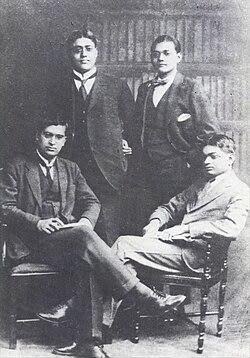
(image collected from Wikipedia)
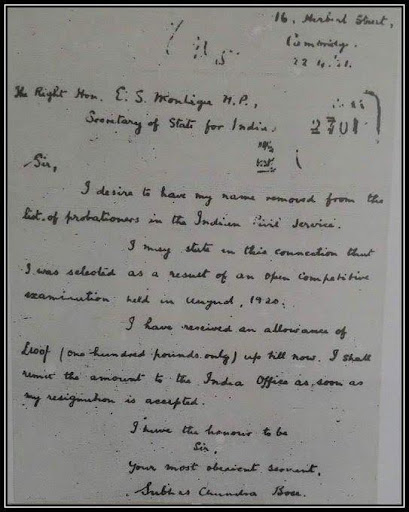
To fulfil his father’s aspirations, Subhas Bose agreed to travel to England to prepare and appear for the lucrative Indian Civil Services (ICS) examination and he arrived in London on October 20, 1919. Subhas Bose successfully appeared in the open competitive examination in August 1920 and was placed fourth. However, he wrote to his brother Sarat Chandra Bose that he would not join the ICS, as by accepting this job he would not be able to serve his motherland. Fearless patriot Subhas wrote to Edwin Montagu, the Secretary of State for India, requesting that his name be removed from the list of Indian Civil Service probationers, stating, “I wish to have my name removed from the list of probationers in the Indian Civil Service.”
Subhas joins the movement
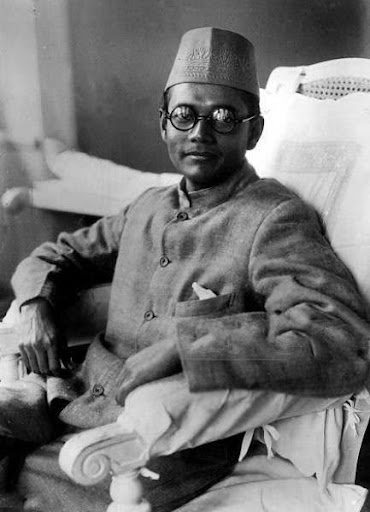
At the age of 24, Subhas arrived in India in Bombay (now Mumbai) in the morning of July 16, 1921 and immediately met Congress leader Mahatma Gandhi. The meeting saw difference of opinion between the two as far as the means of the movement is concerned. Gandhi asked young Subhas to join Deshbandhu Chitta Ranjan Das, the nationalist leader of the Congress party in Bengal. Within C.R Das, Bose could find a real guide for him and who could show him a clear vision for the movement and Das has been regarded as the political guru of Subhas Chandra Bose.
In 1922 Bose founded the newspaper Swaraj and assumed charge of the publicity for the Bengal Provincial Congress Committee. Under the guidance of C.R Das, in 1923, Bose was elected as the President of the Indian Youth Congress and also as the Secretary of the Bengal Provintial Congress. He also worked as the CEO of the Calcutta Municipal Corporation when C.R Das was the first elected was elected mayor of Kolkata in 1924. In the same year, when Bose was leading a protest march in Kolkata, he was arrested and in 1925, Bose was sent to Mandalay jail in British Burma, where he contracted T.B.
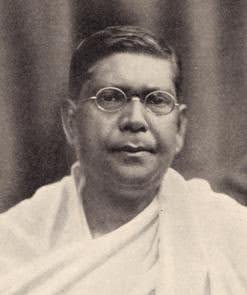
Chittaranjan Das
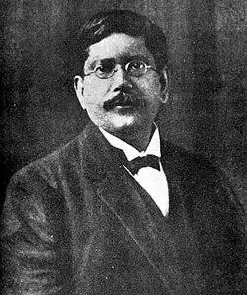
Know as ‘Deshbandhu’ or friend of the nation, Chittaranjan Das or C.R Das was a unique personality of India’s freedom Movement and one of the greatest patriots that Mother India has ever produced. Born in Kolkata on November 5, 1870, his family originally belonged to Munshiganj district of present day Bangladesh. Das was a renowned layer, who left his practice to join active politics to join the independence movement, but successfully defended Aurobindo Ghose and other revolutionaries in the Alipore Bomb Case in 1909. In his famous Uttarpara speech, Sri Aurobindo acknowledged that Das broke his health to save him. C.R Das was actively involved in the activities of Anushilan Samiti, when Pramatha Mitra organised the Samiti as its president to produce hundreds of young firebrands who were ready to sacrifice their lives for the cause of the Nation, Chittaranjan became his associate.
(image courtesy: Shri Anuj Dhar)
(image collected from Wikipedia)
(image collected from Wikipedia)
Deshbandhu led the Non-Cooperation Movement in Bengal in 1919–1922, and initiated the ban on British-made clothes, setting an example by burning his own European clothes and
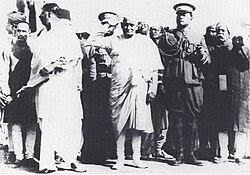
(image collected from Wikipedia. By Unknown photographer – Leonard A. Gordon, Brothers Against the Raj Columbia University Press, Public Domain, https://commons.wikimedia.org/w/index.php?curid=31358482)
Formation of Bengal Volunteers
After being released from prison, Subhas Bose became general secretary of the Congress party and in late December 1928, Bose organised the Annual Meeting of the Indian National Congress in Kolkata. In a unique initiative Bose formed a group of young men, ready to dedicate lives for the nation. The group was dressed in uniform like the army men and Subhas also dressed in uniform declared him as the GOC or the General Officer Commanding of the group. The members of the volunteers group displayed march-past and Subhas took the guard. Bose have the charge of the group to Major Satya Gupta
Youngest President of the Congress
For participating in the Civil Disobedience movement, Bose was arrested again and then he emerged as the elected Mayor of Kolkata in 1930. During the mid-1930s Bose travelled in Europe, visiting Indian students and European politicians, including Benito Mussoloni. In this tour only he started writing his famous book ‘The India Struggle’, which was published in 1935. By that time Bose had become a leader of national stature and was elected as the youngest president of the Congress in 1938. Bose stood for unqualified Swaraj (complete independence), including the use of force against the British. His opinions led to a confrontation between him and other senior leaders of the party, particularly Mahatma Gandhi. Although Bose won the presidential elections in 1939 but had to resign due to his differences with Mahatma Gandhi.
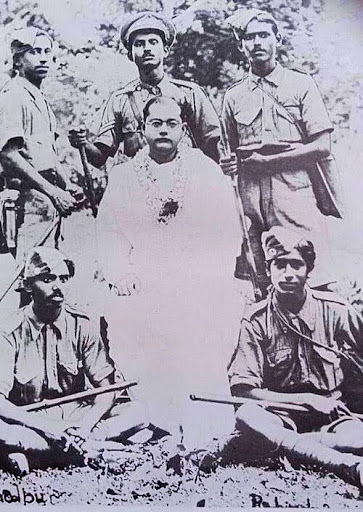
(emage collected from Wikipedia. By Calcutta state archives – Calcutta state archives, Public Domain, https://commons.wikimedia.org/w/index.php?curid=113123240)
Bose had expressed on a number of occasions that the world is about to see another war and Congress should take advantage of the situation and pressurise the British government and give an ultimatum of 6 months for granting independence to India or there would be a civil disobedience throughout the country. After resigning from the presidency of the Congress, On June 22, 1939 Bose organised the All India Forward Block a political party within the Indian National Congress. His correspondence reveals that despite his clear dislike for British subjugation but he was deeply impressed by their methodical and systematic approach and their steadfastly disciplinarian outlook towards life. In England, he exchanged ideas on the future of India with British Labour Party leaders like Clement Attlee (who later became the Prime Minister after the World War II) and other English political thinkers.
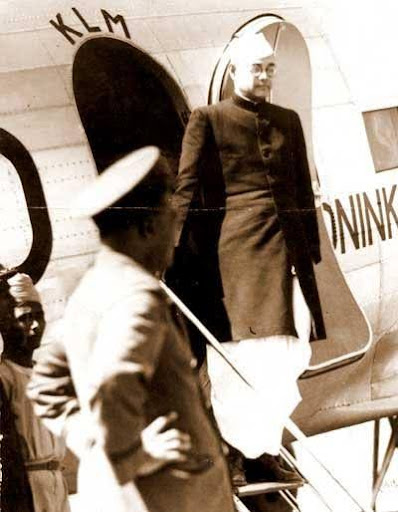
(image collected from Wikipedia)
A great journey to liberate the motherland
As Subhas anticipated, on September 3, 1939, Britain declared war against Germany but the Indian Viceroy also dragged India into the war, without even any consultation with the Indian political leaders.
Crucial Role Played By Forward Block
The Indian political scenario looked divided at this logic that Congress was demanding freedom for India but wanted Britain win the war against the fascist forces. Subhas Chandra Bose’s Forward Block strongly opposed this point of view and declared openly that they did not want Britain to win the war, as only after Britain’s defeat and break-up of the British empire could make India’s independence possible. The strong view taken by the Forward Block paid off as in the very important Congress Working Committee (organised to have an official view about the war) on September 8, 1939, Bose was invited, even though he was not a member of the committee. After the meeting Congress passed a resolution asking the British government to declare its war aims and if India was granted freedom, then a free and democratic India will gladly associate itself with other free nations for mutual defence against aggression and for economic co-operation. However, instead of addressing the concerns of the Congress, the Viceroy was issuing orders related to war-time policy to the provincial governments. The Congress took a bold stance on October 29, resolved of a civil disobedience and asked its ministers in the provincial governments to resign. By October 1939, Congress ministries began resigning in protest. The resignations were a strategic political gesture: India would not legitimise a war entered without consent.
As leader of the Forward Block, Bose advocated for a campaign of mass civil disobedience to protest against Viceroy Linlithgow’s decision to declare war and he organised mass protests in Kolkata. He was again arrested, but was released following a seven-day hunger strike. Bose’s house in Kolkata was kept under surveillance by Bengal CID.
Subhas Chandra Bose understood that it was impossible to be in India and to fight the British in the war time situation in India and he designed a mega plan of leaving India. In a dramatic escape, Subhas left his Elgin Road house in Kolkata in the night of Kolkata on January 17, 1941. He reached Peshawar and after a very difficult and risky journey Bose reached Kabul, but till then the British authorities had no idea where he was. With the support from the Italian Embassy in Kabul, Bose got an Italian passport in the name of an Italian diplomat Orlando Mazzotta. With two Germans and one Italian person, Bose travelled through the mountainous passes of Hindu Kush range and reached Samarkand. From there Bose and his companions boarded a train to Moscow. On March 31, 1941, Bose reached Moscow and on April 2, he reached Berlin.
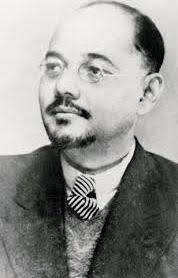
(image collected from netajisubhasbose.org)
The making of NETAJI
“One individual may die for an idea but that idea will after his death incarnate itself in a thousand lives” – Netaji Subhas Chandra Bose
- Subhas Chandra Bose was welcomed in Germany by the German Foreign Office.
- Bose demanded a declaration of support by the Axis Powers (Germany & Italy) for India’s independence.
- Bose’s plan of action in Kabul had been to initiate a revolution by establishing a Government of Free India in Europe and large scale sabotage activities by the Indian revolutionaries to hinder Britain’s war effort.
- On April 9, 1941, Bose sent a detailed report to the German Government with a vision of the work required to be done in Europe, Afghanistan, Tribal territories and India.
- Bose wanted the Indian prisoners of wars (of the British Indian Army) captured by force in the North Africa to be organized into an effective fighting machinery against the British.
- However, German and Italian Government put up an excuse that India was supposed to be within Russian sphere of influence and therefore they could not come up with a statement regarding her future.
- It took Germany long time to understand strategic importance of Bose’s plan and to galvanize it into action.
- Hitler allowed setting up of a Free India Centre.
- Germany also allowed Bose to raise a Legion from the Indian soldiers captured as PoWs.
- German Government helped Bose in establishing a special Department, India that helped Bose in realizing his objectives.
- Azad hind Radio was established in Barlin to address the Indians back home.
- Bose had also gathered around him Indian students and professionals who had the urge to work for India’s freedom. They included A.C.N Nambiar, Abid Hasan Safrani who was to become his secretary, N.G Swamy, who was to head his secret service, N.G. Ganpuley, Pramode Sengupta, Habibur Rahman, M.R Vyas, and Girija Mukherjee.
- It was in Germany, Subhas Chandra Bose got the title of ‘Netaji’ or the great leader, as the soldiers of the Indian Legion and his colleagues started calling him Netaji for his great leadership abilities and uncompromised determination to lead all towards the sacred aim of liberating India.
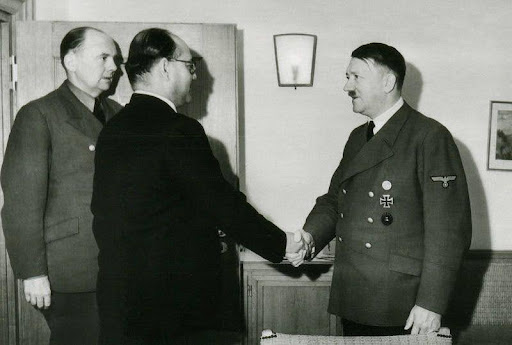
(this image is in public domain, collected from Wikipedia. By Unknown author – [1] [2][3], Public Domain, https://commons.wikimedia.org/w/index.php?curid=37705885)
Voyage towards the Far East
“Life loses half its interest if there is no struggle- if there are no risks to be taken” – Netaji Subhas Chandra Bose
On June 22, 1941, Hitler’s Nazi Germany attacked Soviet and this news ruined the plan of Netaji to reach India with his army through Soviet and Afghanistan with the support of Germany. On the other hand, Japan gained good grounds and some quick victories in the Brtitish occupied areas in the Southeast Asia, and Bose received invitation from the Japanese government (with the persuasion of Rashbehari Bose) to take charge of the Indian Independence League and Indian National Army, which was created by the Indian prisoners of war of the British Indian Army, to fight for India’s liberation from the British.
- In a historic voyage in February 1943, Bose boarded a German U-boat (submarine) and left for Japan with his secretary Abid Hasan Safrani.
- After a very risky submarine journey in the German U-boat during the war, near Madagascar, Netaji was transferred to the I-29 Japanese submarine for the rest of the journey to Japan.
The fascinating story of the submarine journey
The German submarine was with its forward torpedo tubes removed to create a space for the extra cargo. Netaji and Hassan spent invested their time in the long voyage in planning for the upcoming venture in the Far East. As per the written accounts of Abid Hassan, the unpleasant smell of the diesel flooded the air, the food and even the blankets. Abid gathered some lentils and rice and cooked a Khichdi. Bose and Abid worked tirelessly in preparing for the challenges in Asia like negotiation strategy with the Japanese and methods to win over the trust of the Indian soldiers of the British Indian army. He also wrote out or dictated the speeches he would make to the soldiers of INA, to Hasan for typing or writing. He made future plans for a Government in exile. Netaji Bose shared with Abid his fear of his worst fate as “to be in exile”. On April 18, 1943 in the South Atlantic, the submarine, on sighting the British merchant ship S.S Corbis, fired torpedoes and the ship went down in flames. Couple of days later another cargo ship was sighted and the U boat had accidentally surfaced, it had to dive back to prevent from getting rammed by the British vessel. In the midst of the crisis Bose remained unperturbed and went on dictating his instructions to Hasan. The captain of the U boat Musenberg instructed his sailors to emulate the conduct of the revered guest in dangerous situation, i.e. by staying calm and composed.
The submarine rounded the Cape of Good Hope and entered Indian Ocean. On April 20, 1943, the Japanese submarine I 29 had left Penang under captain was Teraoka to receive Netaji. The two submarines met each other near Madagascar coast. The sea was very rough for the transfer of the passengers, so they waited for a day or two and at last took the risk and transferred Bose and Abid using a raft and a rope. This is the only submarine to submarine transfer in the history of the two world wars, that too in enemy waters. On the Japanese submarine, Netaji and Abid received a very warm welcome and the captain gave his cabin to Netaji to stay. For the Indian guests, the food was prepared using Indian spices and they felt at home with the Japanese. The submarine was bigger and spacious. Teraoka vacated his cabin for Bose. I 29 docked safely in Sabangin Sumatra on May 6. Col. Yamamato, whom Netaji had met in Germany was there in Sabang to receive him. After a few days rest Bose boarded a Japanese plane to reach Tokyo in May 1943 and he checked in the Imperial hotel in Tokyo as Matsuda.
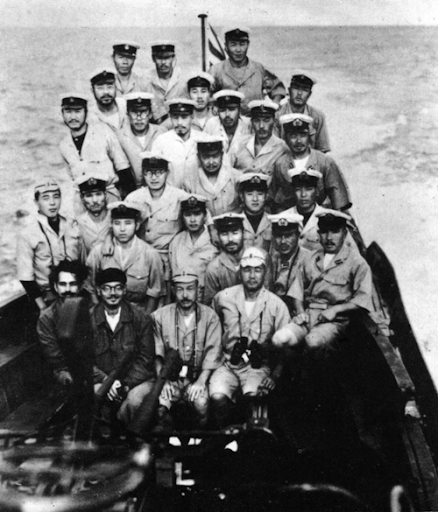
(this image is in public domain, collected from Wikipedia. By Crew member of submarine I-29 of the Imperial Japanese Navy – scan from book Werth, Alexander (1971) Der Tiger Indiens. Subhas Chandra Bose. Ein Leben für die Freiheit des Subkontinents[2], München, Esslingen: Bechtle, ISBN 3762801509, Public Domain, https://commons.wikimedia.org/w/index.php?curid=9877888)
- Veteran revolutionary leader, President of the Indian Independence League, Rashbehari Bose and Netaji met for the first time at the Imperial Hotel in Tokyo. That was an emotional moment for the two great sons of Bengal and they discussed about the future planning and activities.
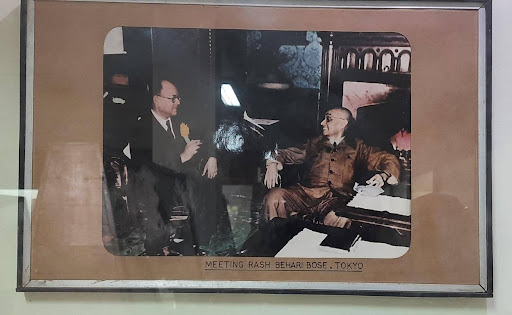
(Photo courtesy: INA War Museum, Moirang, Manipur)
- On June 10, 1943 Netaji met Hideki Tojo, the Japanese Prime Minister. Netaji received a warm welcome from the Prime Minister. Tojo assured him to provide all kinds of assistance for India’s independence.
- On June 12, 1943 Tokyo Radio announced the presence of Netaji in Japan and all his other names like Orlando Mazzotta, Matsuda were gone.
- Prime Minister Tojo declared about Japan’s commitment to help Subhas Chandra Bose to achieve India’s freedom in the Japanese legislature.
- On June 27, 1943 Netaji Bose arrived in Singapore and he was accompanied by Rashbehari Bose. Netaji was welcomed like a hero by the members of the Indian National Army (under IIL) and the Indian diaspora, who were eagerly waiting for his arrival for months. Thousands of people gathered just to get a glimpse of the great man and he was like a Messiah for them.
- On the next day at the Singapore City Hall ground Netaji reviewed the march past by the 1500 INA soldiers led by the INA military chief Maj. Gen. Kiani. The Japanese Prime Minister Tojo was present in the event as the Guest of Honour. The famous slogan of “Chalo Dilli” or onwards to Delhi was given by Netaji during his address.
- Netaji emphasized that INA should be a true Indian force and common Indians of South East Asia must join. He decided not to be fully dependent upon the Japanese help and he started raising funds for the INA from the people of Indian origin.
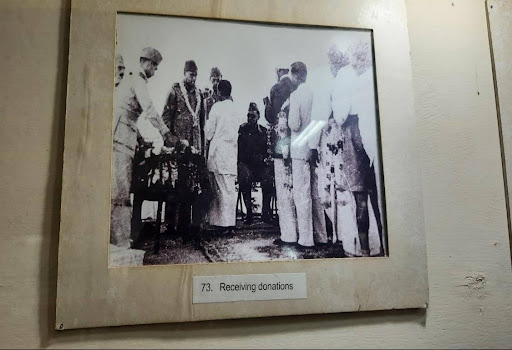
(Image courtesy: INA War Museum, Moirang, Manipur)
- The famous slogan of Netaji “Give me blood and I shall give you freedom” changed the lives of many Indians who not even for once visited India and now they were ready to donate everything they have for the cause of the freedom of their motherland ‘India’. Thousands of Indian civilians living in Southeast Asia also joined the INA and got trained to fight the colonial British.
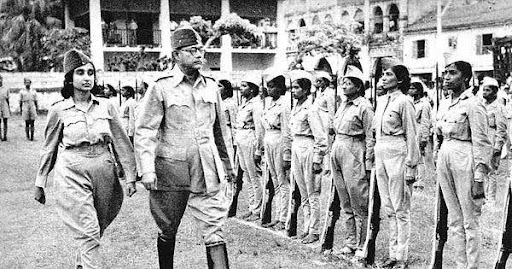
- Netaji urged the Indian women to join the INA and they should not refrain from fighting the enemy. The Japanese army officials initially made some objections to this but those could not stand in front of Netaji’s decision.
- Netaji decided to create an all-women regiment in the name of the great warrior Queen of Jhansi ‘Lakshmi Bai’ who sacrificed her life fighting the British during the 1857 uprising in India. Capt. (Dr.) Lakshmi Swaminathan of the INA was given the responsibility to form the regiment.
(image collected from netajisubhasbose.org)
- Netaji also decided that the expenditure to be incurred for the women’s regiment would be taken care by the funds raised by the INA and Japanese help would not be taken. This was for the first time in the history of warfare in the entire world that an all-women regiment was made and they were trained to truly fight on the battle field.
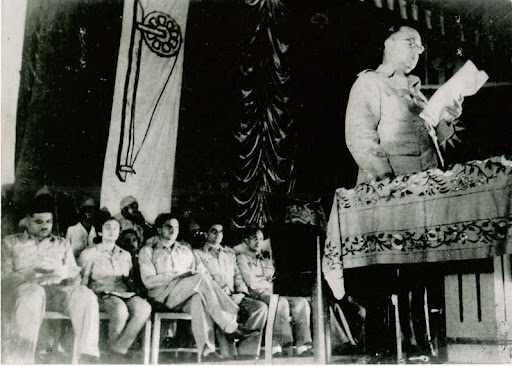
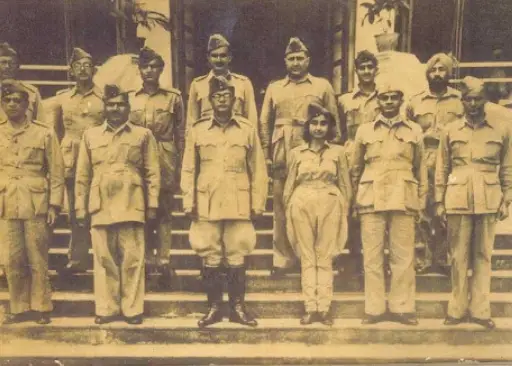
- On the historic day of October 21, 1942 Netaji proclaimed the ‘Arzi Hukumat E Azad Hind’ or the Provisional Government of Free India in exile in Singapore. He took the oath in front of a huge gathering as the Prime Minister and Head of the State.
(this image is in public domain, collected from Wikipedia)
(this image is in public domain, collected from Wikipedia)
- ‘Hindustani’ was adopted as the official language by the provisional government. The simplified Hindustani version of the song ‘Jana Gana Mana’ by Rabindranath Tagore which is ‘Shubh Sukh Chain’ was adopted as the national anthem. The government was recognized by Japan, Germany, Italy and other axis power nations. Netaji received a congratulatory note from Ireland. Even the Azad Hind Govt. had a consulate in the Soviet.
- Prime Minister Tojo gave the territorial authority of the Japanese captured Indian territories of Andaman and Nicobar to Netaji Subhas Chandra Bose.
- On October 23, 1943 the provisional government of Azad Hind declared war on Britain and America at five minutes past mid night.
The War of Independence
“India is calling. Blood is calling to blood. Getup, we have no time to lose. Take up your arms. The road to Delhi is the road to freedom. Chalo Delhi” – Netaji Subhas Chandra Bose
Singapore was roaring with the slogans of Jai Hind and Chalo Dilli and all the Indians were charged up for a massive fight. As per the official history of the INA the total strength of the INA was 60,000. The Supreme Commander of the INA, Netaji Subhas Chandra Bose decided to launch the war through the Indo-Burma border and that is why, he shifted his head quarters from Singapore to Rangoon. Netaji was very clear about the role of the INA and before beginning of the INA advance, he made a final deal with the Japanese authorities that they would have no authority over the INA and the INA would have full control over the areas of India which would be captured by the INA. Only Indian tricolor would be hoisted in those areas and the Japanese forces role would be restricted to help the INA after entering into India.
It is important to mention that at that point of time the allied forces gathered good strength, they were now quite aware about the Japanese tactics and after the U.S joined the war the allied forces achieved air superiority over the Japanese. Historian, author and military analyst Maj. Gen. G.D Bakshi explained in his book ”Bose, The Indian Samurai”, that if Japan could have managed to bring Netaji from Germany at the beginning of 1942 when the Japanese had the upper hand, the situation could have been totally different. And, due to this delay the allied forces got sufficient time to re-group and made solid strategies to restrict a potential threat from the Indo- Burma border.
The INA achieved its first military success on February 4, 1944 in the Arakan Hills of Burma. Netaji congratulated his man and he shifted his office near the Indian border. The INA and the Japanese forces advanced towards Imphal. The main problems they faced, was not the enemy but the monsoon rains which destroyed the roads and it became impossible to send reinforcements, food and medicine. But the INA men fought bravely and on 8th April they captured Kohima and on April 14, 1944 the Azad Hind Fauj or the INA reached Moirang in Manipur and for the first time the Indian tricolor flattered on an Indian territory by the head of INA’s Bahadur Group, Col. Shaukat Ali Malik. And, now the aim was to capture Imphal and the rail head quarters of Dimapur.
But the continued rains caused huge damage and there was a total stoppage of supply of food and medicines due to logistical issues. The problems caused by malaria and insect bites in the jungles were becoming impossible to handle. On the other hand, the strong British-Indian and American forces with modern equipments and superior air power stopped the advance of the Japanese- INA forces. But the resistance shown by the Japanese-INA forces was exemplary. The INA held their positions for three months though there was no food, no medicine and they were dying one by one out of starvation, malaria and other diseases, which allowed the Japanese to fight a fierce battle with the allied forces but ultimately they had to retreat.
Netaji lost the war, but he won the victory of India over Britain
- According to historian Ranjan Borra, “the Imphal Campaign (including the battle of Kohima) will perhaps go down in the history as one of the most daring and disastrous campaign in the annals of world history.”
- After retreat, even then Rangoon was becoming dangerous for Netaji to stay due to the air bombings of the allied forces who were marching towards Rangoon. The Japanese started living Rangoon. Netaji decided to stay at Rangoon and did not fear for his life but the higher officials of the INA continuously insisted him to leave for Mowlamyine which was relatively safer, as his life was precious for liberation of India. After that, Netaji accepted their request.
- One division of the INA alone stationed at Rangoon for its protection and others got ready for the war against the advancing British-Indian-American forces on the Mount Popa and Mektila.
- In these famous battles, there were better coordination between both the Japanese and the INA forces. But like the battle of Kohima due to the superior air power finally the British won the battle though the Japanese- INA forces fought bravely.
- Netaji had to leave Rangoon on April 24, 1945 and had to move towards Bangkok but he did not go there on his car, rather he went on foot along with his INA men and the women’s regiment. They finally reached there on May 14, 1945 and it was a very tiring journey which was full of danger and Netaji and his men somehow survived the enemy bombing. From Bangkok Netaji flew to Singapore, where he stayed till August 1945.
- After the horrific atomic blasts in the Japanese cities of Hiroshima and Nagasaki, Japan declared its surrender on August 15, 1945 and it was all over for Netaji and the INA. Netaji had a meeting with his officials for making arrangements to pay the dues to the INA men and to build a War Memorial for the Azad Hind Fauj, so that people could remember their fight and sacrifices. The war memorial was erected within a very short time before the British force’s advance in Singapore.
- Studies suggest that in consultation with the Japanese intelligence agencies Netaji had the plan to move to the Soviet to continue his fight for India’s freedom from there and he wanted to move towards Manchuria. In the mid of August he left Singapore for Saigon then to Manchuria.
- The Japanese press reported that Netaji’s plane crashed while taking off from the Taipei airport and he died on August 18, 1945. However, there was no concrete evidence of his death and many were of the opinion that this was a plan framed by the Japanese intelligence so that Netaji could safely reach Soviet.
- The British authorities for so long had censored all the news and radio broadcasts of the INA in India and after the war, arranged the plot of Red Fort Trials to punish and humiliate the arrested INA men and treat them as traitors.
- Anger irrupted among the people of India and demonstrations and processions started in the entire country in support of the INA men. Even during the demonstrations young students got killed in Kolkata in police firings.
- Meanwhile after the war, the authorities demobilized or decommissioned nearly 2.5 million Indian Army men (of the British Indian Army) and they were even not entitled to get pensions. These events created a huge anger and mistrust among the armed forces in India against their British masters, whom they have served for centuries as a loyal force.
- The INA trials had inflamed the Indian soldiers, sailors and airmen of the British Indian Armed Forces. And, a huge revolt erupted in the Royal Indian Navy in February 1946. This was enough for the colonial masters to understand that time has come to grant independence to India as this has become very difficult to control the armed forces, which were loyal to them till then and they will not be able to handle an 1857 like revolt anymore.
- On February 20, 1947 British Prime Minister Clement Attlee announced that the British Govt. would grant full self-governance to India by June 1948 at the latest.
- Netaji’s prophecy after the defeat in the war proved to be true, that when the Indians would be aware about the sacrifices of the INA and the Indians of East Asia, they would revolt against the colonial British and that will pave the way of their exit.
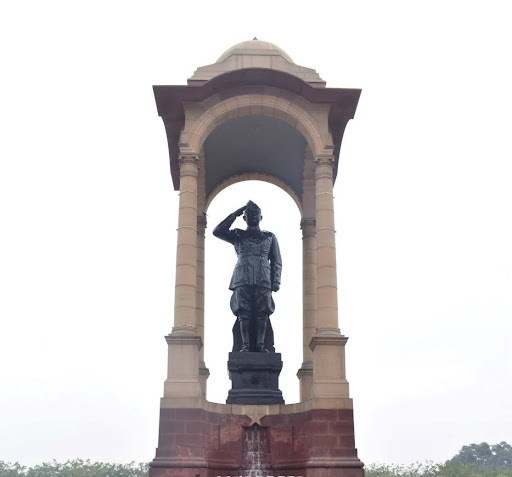
On the issue of death of Netaji Subhas Chandra Bose there were three committee, commissions setup in free India to investigate the matter. The first two commissions (Shahnawaz Committee & Justice Khosla) opined that Netaji died in the plane crash, however, the last Justice Mukherjee Commission stated that the plane crash did not happen, so Netaji did not die in that incident. So, till today we are not aware what happened to the great man, who played the key role for the British government to finally take the decision to leave India.
(image courtesy Shubham Sharma)
Famous American historian Peter Ward Fay did extensive research on the Indian National Army and in his book ‘The Forgotten Army’, he established that Netaji and his INA could not enter deep into India as a victorious army and had to withdraw but the subsequent events in India created an unstoppable political tremor throughout India and impacted very significantly the British Indian Army. The British Raj could no longer trust and depend on the British Indian Army to continue to rule India and that was the reason for their exit in 1947.
The ‘Transfer of Power’, Vol. 6 (documents related to Indian Independence Act, declassified in 1970’s) shows secret communications between the top govt. officials of Indian and London, states about the impact of the INA Trials and its impact in the Indian armed forces and among the common masses in India. And, these facts ultimately explains why former British Prime Minister, Clement Attlee during his stay at Raj Bhavan, Kolkata in 1956, emphasised on the role played by Netaji as the principle reason for British exit from India, while speaking with the then Governor of West Bengal, Justice P.B Chakraborty. The detail of the conversation is mentioned in eminent historian R.C Majumdar’s famous book ‘History of Modern Bengal’, as Justice Chakraborty himself wrote a letter to the publishers of the book explaining his conversation with Attlee.
The trials of the INA officers (P.K. Sahgal, G.S. Dhillon, and Shah Nawaz Khan) ultimately turned the military defeat of the INA into a political victory for the Indian independence movement.