
Lord Curzon's partition of Bengal in 1905 that ignited India's mass nationalist movement.
While discussing on the partition of Bengal, on February 17, 1904, Lord Curzon (Viceroy of India) wrote to Mr. Broderick, the Secretary of State for India: "The Bengalees consider themselves a separate nation and dream that in no distant future, the Britishers would be driven away from India and a Bengalee Babu would be occupying the Governor-General's residence in Calcutta. As the partition of Bengal will remove this possibility, they are opposing it. If now we listen to their protests in a moment of weakness, we shall never be able in future to separate any portion from Bengal and the united efforts of the entire Bengalee race would be a source of great danger to the Indian empire."
(Source: Book "History of Modern Bengal" by Dr. R.C Majumdar)
1905 will remain a significant year in the history of Bengal and India, as in this year the province of Bengal got partitioned by the British colonial rulers. The protests following the partition led to the Indian independence struggle in real sense.
The British Raj in the name of good governance begun its project of dividing Bengal much earlier than 1905. When Lord Curzon took charge as the Governor General, he proposed a plan to include the Bengal districts of Dhaka, Chittagong, Mymensingh in the province of Assam. The proposal was to create a new province having North Bengal, East Bengal and Assam together and another province with West Bengal, Bihar and Orissa (now Odisha).
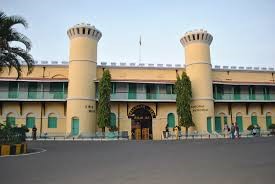
(this image is in public domain, collected from Wikipedia)
Bengal witnessed unprecedented protests after the declaration of partition of the province and between December 1903 till October 1905 about 3000 protest meetings were held in Bengal. The protests were participated by people belonging to all levels of the society starting from the Rajas, Zamindars, Intellectuals, farmers, etc.
Lord Curzon and his government could successfully induce Khwaja Salimulla, the Nawab of Dacca (Now Dhaka) not only to support the partition but also through his influence, to keep the Muslim community away from the agitations. It was clearly an effort to make a Hindu-Muslim divide in this region by the use of infamous "divide and rule policy" of the British Raj. Importantly, later in 1906, Salimulla founded the Muslim League in Dhaka.
On August 7, 1905, a huge protest meeting was organized at the Town Hall in Kolkata, which was attended by eminent persons, students and large numbers of common people. They were carrying banners with slogans like "Samjukta Bangla" (United Bengal), "Ekatayi Shakti" (unity is power), "Bande Mataram", "Banga Bhanga chaina" (do not want partition of Bengal), etc. Maharaja Manindra Chandra Nandi of Cassimbazar presided over the meeting.
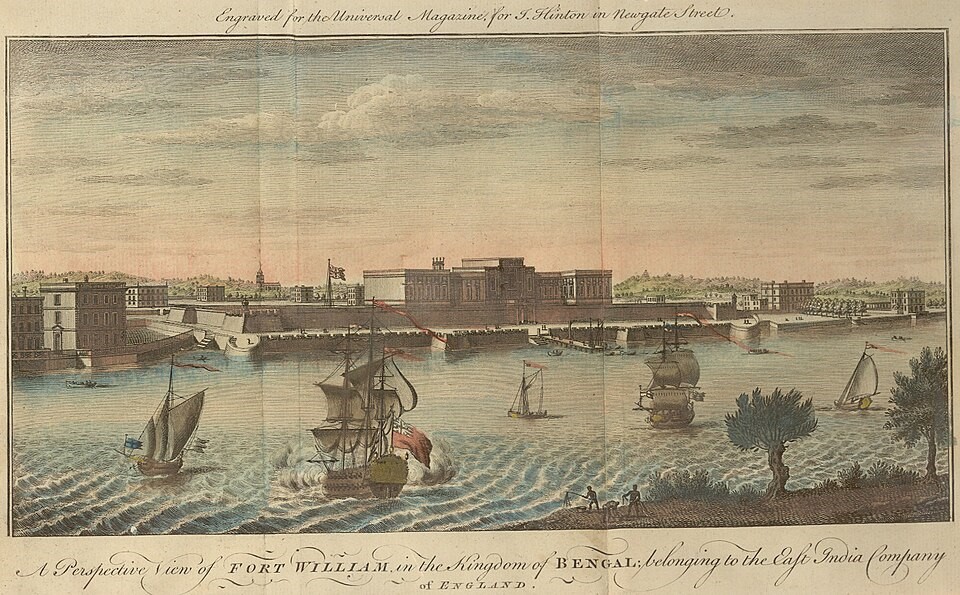
(this image is in public domain, collected from Wikipedia)
On October 16, 1905, on the day when the partition was effective, there was a huge gathering accumulated at the Kalighat Temple in Kolkata. As a mark of unity, Rabindranath Tagore came-up with a unique proposal of "Rakhi Bandhan" — tying coloured threads on each other's wrist, saying "brothers shall not separate". This appeal received overwhelming response by both the Hindu and Muslim communities. Gurudev Tagore on this occasion recited his newly composed song "Banglar Mati Banglar Jal, Banglar Vayi Banglar Phal".
After the nationwide outrage, on December 12, 1911, from the Delhi Durbar, King George V declared the annulment of Bengal Partition — the first major popular victory against British policy in India. However, the divide and rule policy of 1905 was ultimately responsible for the partition of India in 1947 and the birth of Pakistan.