
Midnapur — where three consecutive District Magistrates were killed by revolutionaries.
The district of Midnapur (Medinipur) in Bengal played a remarkable role in the history of India's struggle for independence. From the late nineteenth century to the final phase of the freedom movement, the region produced an extraordinary number of revolutionaries, organisers, and martyrs. British reports called it "one of the most violent districts" due to political assassinations, sabotage, and underground networks.
The district became a stronghold of the Bengali revolutionary movement due to the spread of nationalist education, growth of physical culture clubs, influence of secret revolutionary societies, and strong rural networks resistant to colonial authority.
Figures like Hem Chandra Kanungo, born in Radhanagar, Paschim Medinipur, who was trained in Paris in bomb-making inspired many.
After Peddie's death, Midnapore welcomed a new District Magistrate by the name of Robert Douglas, a 42-year-old Scotsman. During his watch, an open fire on prisoners of Hijli jail on September 16, 1931, resulted in the deaths of Tarakeshwar Sen and Santosh Kumar Mitra.
The incident caused huge anger in Bengal. It upset Gurudev Rabindranath Tagore and he joined the protest meeting in Kolkata maidan and wrote a strong letter to the editor of The Statesman. The letter was returned to him by The Statesman editorial office saying it was "unfit to publish" — this is perhaps the only write-up of Tagore that was rejected by a newspaper. Tagore wrote his epochal Bengali poem "Prashna" (The Question) in protest.
Seeing the oppressive attitude of Douglas, Bengal Volunteers awarded him death. On April 30, 1932, Pradyut Bhattacharya and Prabhangshu Shekhar Pal entered the DM's office through the rear entrance. Swiftly and decisively, the two boys unleashed a barrage of bullets into Douglas's neck and head, ending his life. Pradyut was apprehended and executed at Midnapore Central Jail on January 12, 1933.
On September 2, 1933, at the Midnapore football ground, young members of Bengal Volunteers Brajo Kishore Chakraborty (aged 20), Ram Krishna Roy (also 20), 17-year-old Nirmal Jeevan Ghosh, Mrigen Dutta and Anathbandhu Panja (aged 22) attacked magistrate Berge with eight bullets as he got out of his car.
Anathbandhu died immediately and Mrigen the following day. The remaining three were swiftly subdued. All three were sentenced to death on November 3, 1933. Brajo Kishore and Ram Krishna were hanged on October 25, 1934 and Nirmal was hanged the next day within the confines of Midnapore Central Jail.
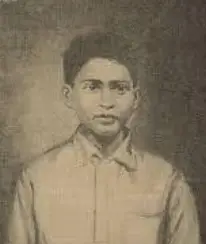
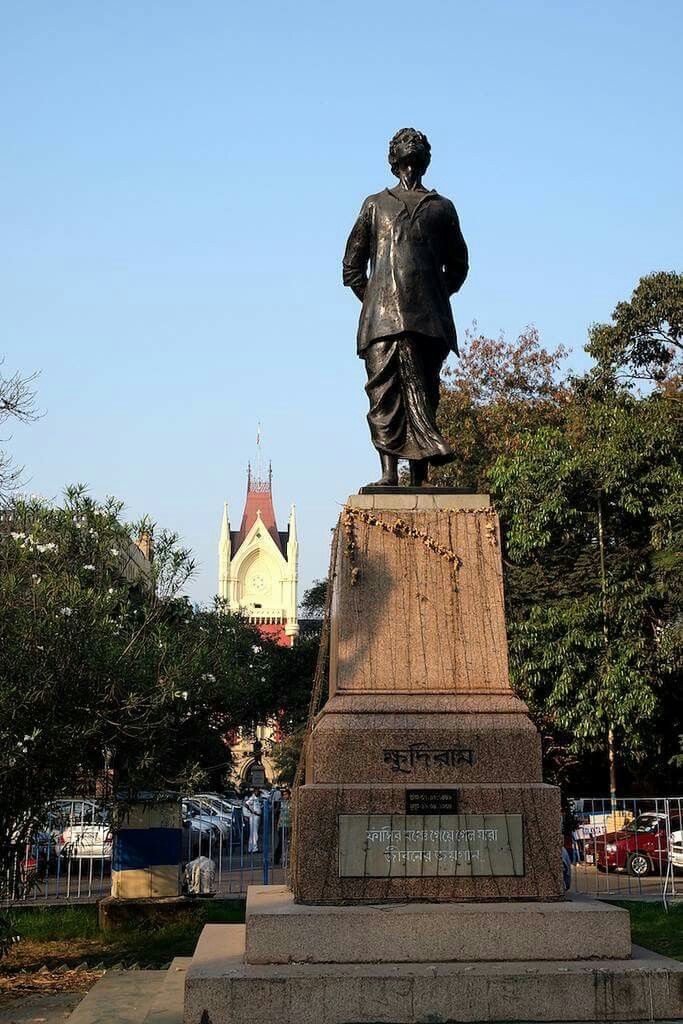
Age 20. Led the attack on Berge, the third District Magistrate of Midnapore to be assassinated. Hanged October 25, 1934.
Age 17 at the time of the Berge assassination. Hanged October 26, 1934 within Midnapore Central Jail.