
India's hard-won independence — but at the price of partition into two dominions.
It was the partition of Bengal in 1905 that ignited the torch of nationalism in Bengal and in rest of India to rise against the British rule and the colonial masters had to leave India in 1947. But the policy of divide and rule displayed in 1905 was ultimately responsible for the partition of India in 1947 and the birth of Pakistan.
The three INA officers (Shah Nawaz Khan, Gurbaksh Singh Dhillon, Prem Sehgal) could successfully defend themselves and the defence council particularly Bhulabhai Desai was successful in proving that the INA was fighting for India's freedom and it was under a legitimate, formally created government. The British authorities were about to either execute the officers or deport them for life imprisonment, however, due to the arguments presented in the court proceedings and the nationwide outrage, the authorities had to ultimately release the INA men.
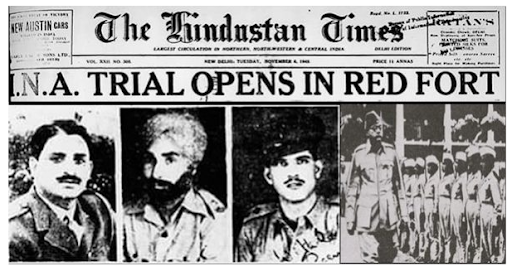
(images collected from the book Mrityunjayi published by Information and Culture Department, Govt. of West Bengal)
Leading figure of the 1946 Naval Mutiny, B.C Dutt was born in Bardhaman district of Bengal. Dutt played a significant role in the 1946 mutiny, the mutiny contributed greatly in India's independence.
(Information & image courtesy: Shubham Sharma)

(AI generated image depicting how British government took the decision to leave India after WW II)
Source: Book by Dr. Kalyan Kumar De — NETAJI: India's Independence and British Archives
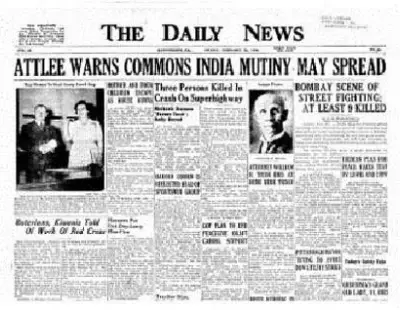
(AI generated image depicting West Bengal Governor Justice P.B Chakraborty having a discussion with former British Prime Minister Clement Attlee in Kolkata Raj Bhavan in 1956)
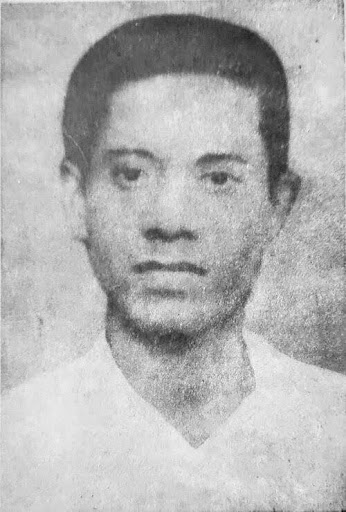
Threw a bomb at Viceroy Lord Hardinge's procession during the Delhi Durbar of December 23, 1912. Subsequently hanged — a young martyr of the revolutionary movement. (image & information courtesy: Rahara Khardah Jatiyatabadi Yuva Mancha & Shri Tarun Biswas, grandnephew)
Leading figure of the 1946 Naval Mutiny. Born in Bardhaman district of Bengal. Dutt's actions contributed greatly to India's independence.