
"Give me blood, and I shall give you freedom!" — Netaji's INA forced the British to leave India.
"Give me blood, and I shall give you freedom!" — Netaji Subhas Chandra Bose. His words continue to inspire, emphasizing action over words, absolute dedication, and the refusal to accept colonial rule.
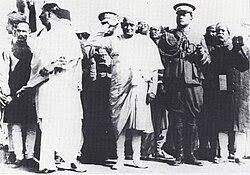
(image collected from Wikipedia)
Former British Prime Minister Clement Attlee, during whose tenure India's independence happened, visited India in 1956 and he stayed at the Kolkata Raj Bhavan for two days. During that time, the then Governor of West Bengal Justice P.B Chakraborty asked his guest some direct question on the reasons for granting independence to India in 1947. In reply Attlee cited several reasons, the principal among them being the erosion of loyalty to the British crown among the Indian army and navy personnel as a result of the military activities of Netaji Subhas Chandra Bose.
Following his five older brothers, Subhas entered the Ravenshaw Collegiate School in Cuttack in 1909 at age 12, where he could also learn Bengali and Sanskrit. In his auto-biography "An Indian Pilgrim" he mentioned about his experiences in this school. Young Subhas Chandra Bose was also inspired by the teachings of Sri Ramakrishna and Swami Vivekananda — Bose considered Swami Vivekananda as his spiritual guru.
On June 22, 1939, Bose organised the All India Forward Block. In January 1941, Netaji made his legendary escape from British house arrest in Calcutta — travelling to Peshawar, through Afghanistan, to the Soviet Union and then to Germany. Bose met Hitler in Berlin in 1942 seeking Axis support for Indian independence.
Netaji took command of the INA in Singapore in 1943. Under his leadership, the INA — comprising 85,000 Indian soldiers — marched under "Delhi Chalo!" through Burma towards India.
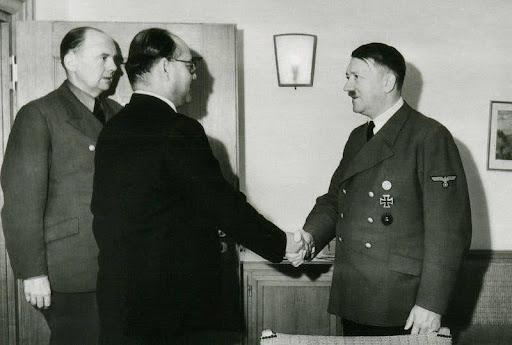
(this image is in public domain, collected from Wikipedia, Public Domain)
On the issue of death of Netaji Subhas Chandra Bose there were three committees, commissions setup in free India to investigate the matter. The first two commissions (Shahnawaz Committee & Justice Khosla) opined that Netaji died in the plane crash, however, the last Justice Mukherjee Commission stated that the plane crash did not happen, so Netaji did not die in that incident. So, till today we are not aware what happened to the great man, who played the key role for the British government to finally take the decision to leave India.
(image courtesy Shubham Sharma)